 |
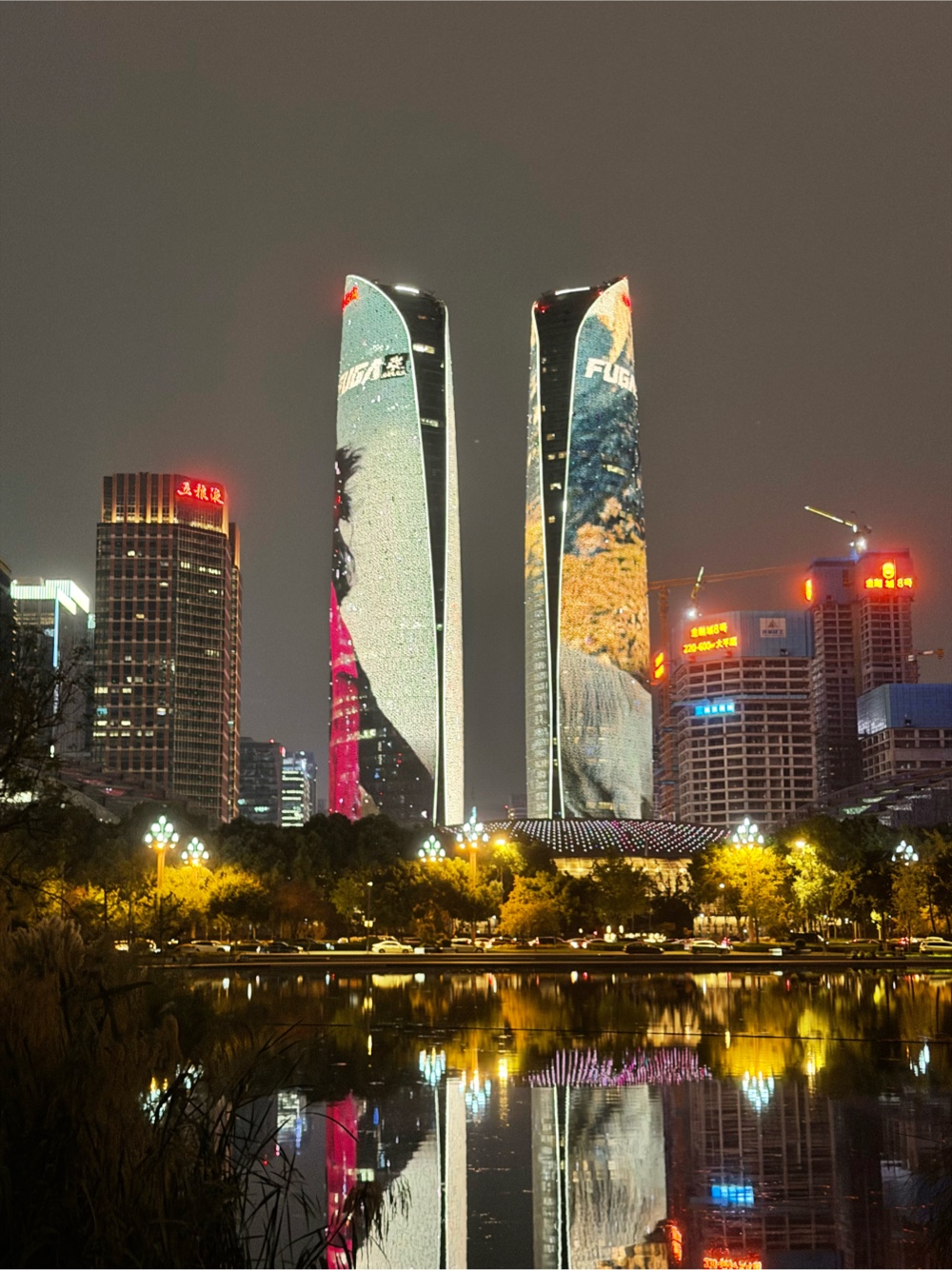
| The Chengdu Twin Towers |
How do you picture a 2,500-year-old city of 24 million people in the center of China, some call the “chill city” for its parks, lakes tea gardens and cuddly pandas? If the above photo startles you, that’s understandable. Chengdu, like most big Chinese cities, has multiple personalities. Depending on your mood, you could be sipping a latte under the flashing lights of towering skyscrapers, or you could be joining the local women in People‘s Park for morning tai chi.
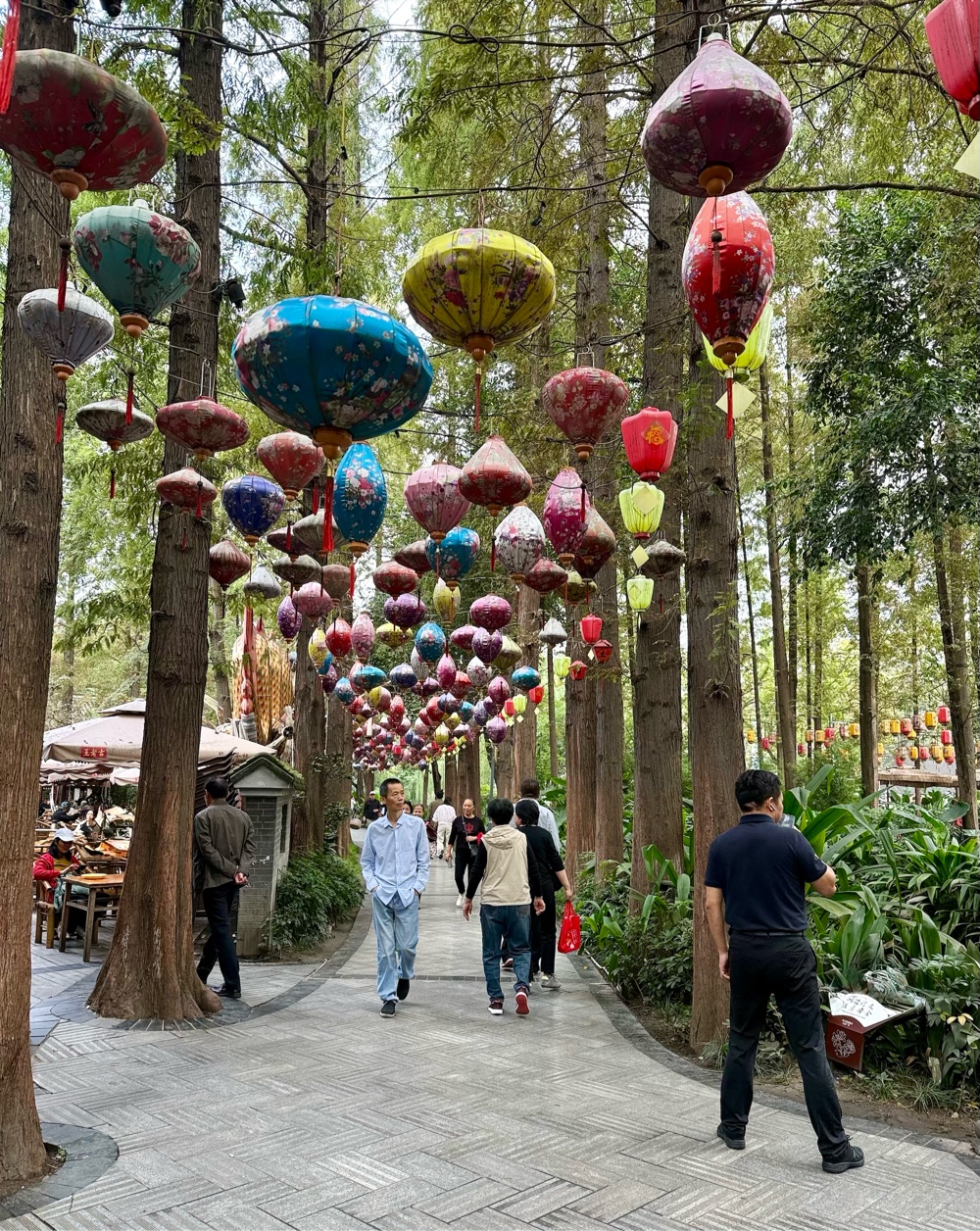 |
| People‘s Park |
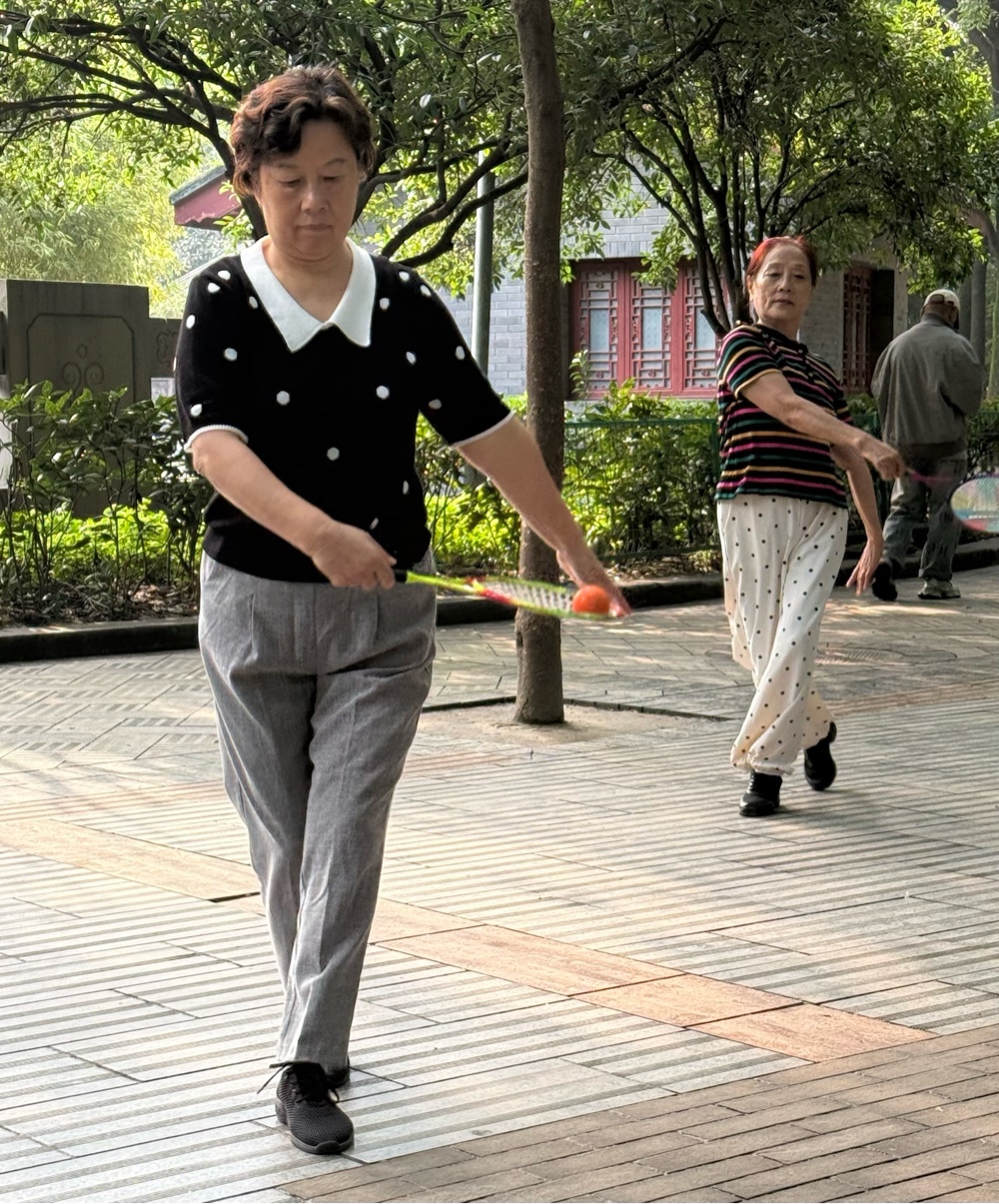 |
| Morning tai chi - everyone welcome |
After last visiting China 17 and 20 years ago, Tom and I have returned to see what‘s new as well as savor the traditional culture that never fails to surprise. It means that one night we might be biking in a bike lane next to four lanes of traffic to see the financial district lit up like Disneyland, while the next day, we might be watching street vendors “selling” shoulder massages and ear-cleaning services to locals relaxing over tea in an urban park.
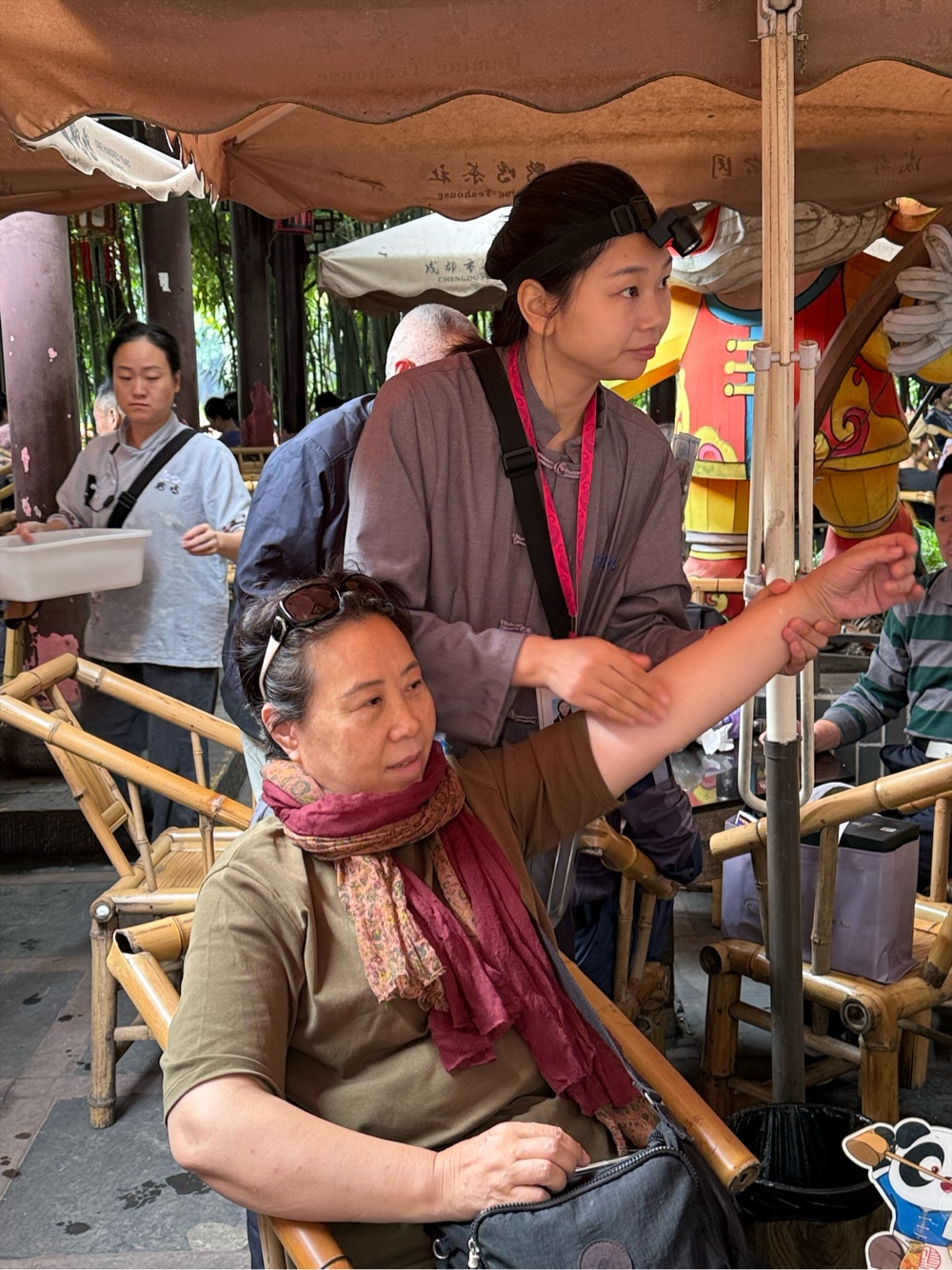 |
| Massage and tea in People‘s Park |
People call Chengdu the most relaxed city in China, said Luna Lu, 33, a guide for FreeTour.com, as we walked with her our first morning in People’s Park, a gathering spot since 1911, offering a peaceful escape from the traffic and crowds outside. Luna studied in Indiana and lived in New York before returning to Chengdu to start her own tour company. Like a half-dozen or so young people we met, marriage and children are not in the cards to the regret of the government which has lifted its one child policy. “Now they encourage you to have children,” Luna said. But economics and a sense of not wanting to be tied down are getting the way. Thus the reason we stop in the park’s Romance Garden which she describes as an off-line Tinder site for eligible young men and women.
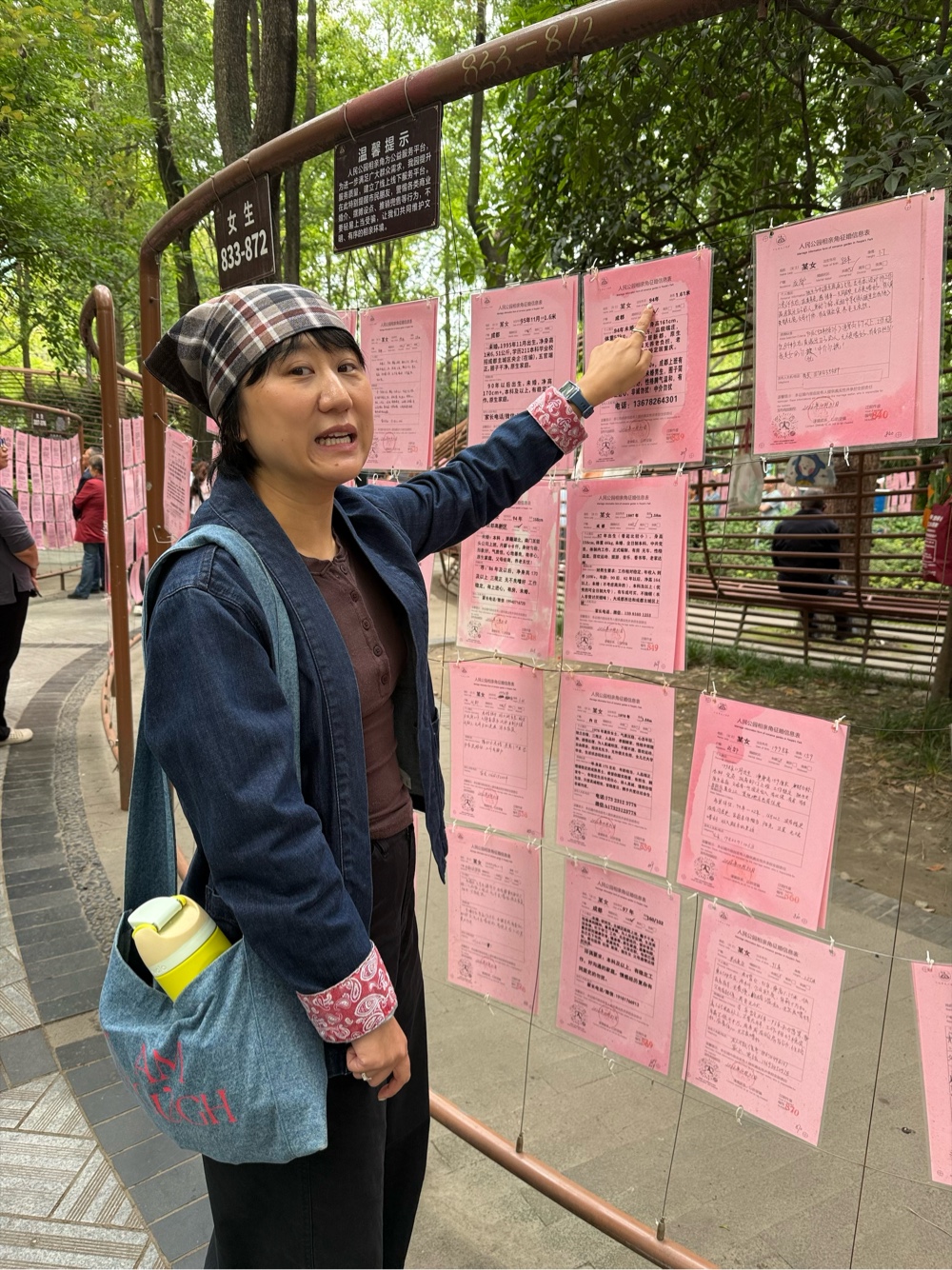 |
| Romance Corner, girls section, People‘s Park |
Parents post their childrens’ resumes in hopes of finding a suitable match. In reality, Luna told us, it’s mostly wishful thinking in that most young people prefer to find their own partners.
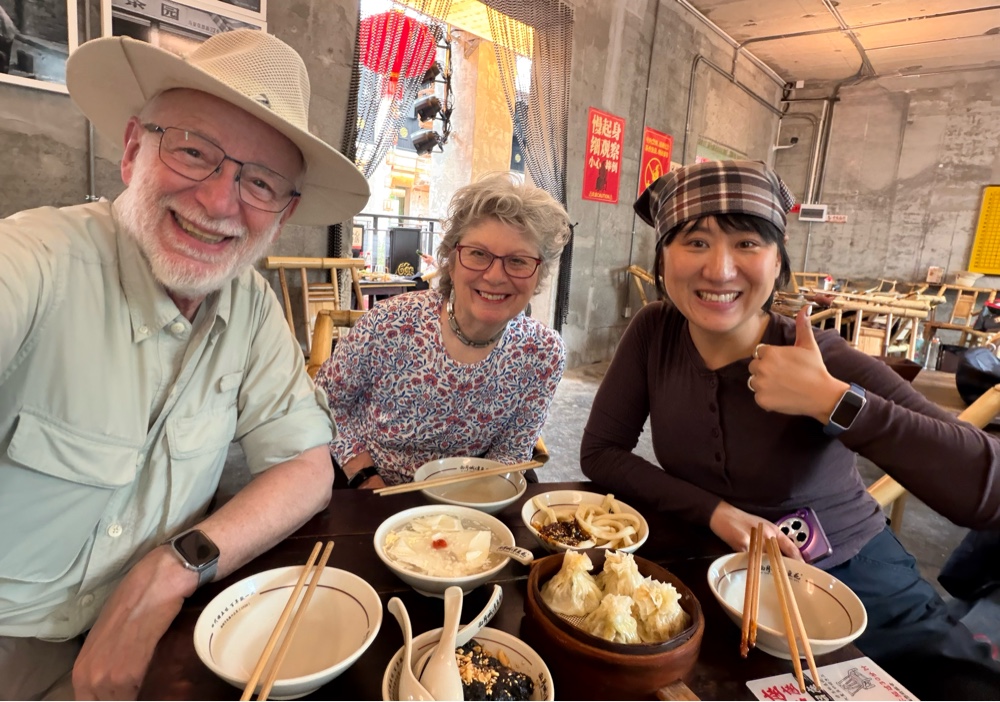 |
| Tea and snacks with Luna Lu at the Great Banner Teahouse |
Taking a break at the Great Banner Teahouse, we tried some traditional snacks - sweet water noodles, tofu with fermented rice, soup dumplings and sticky rice with peanuts. People who want to save money are welcome to bring their own picnic to a teahouse, Luna told us, and sit for hours drinking tea refreshed with jugs of hot water. Later we walked together to the Qingyang Palace, known as the Number One Taoist Temple, the oldest and largest Taoist temple in Chengdu, part of a serene complex rebuilt in the Qing Dynasty.
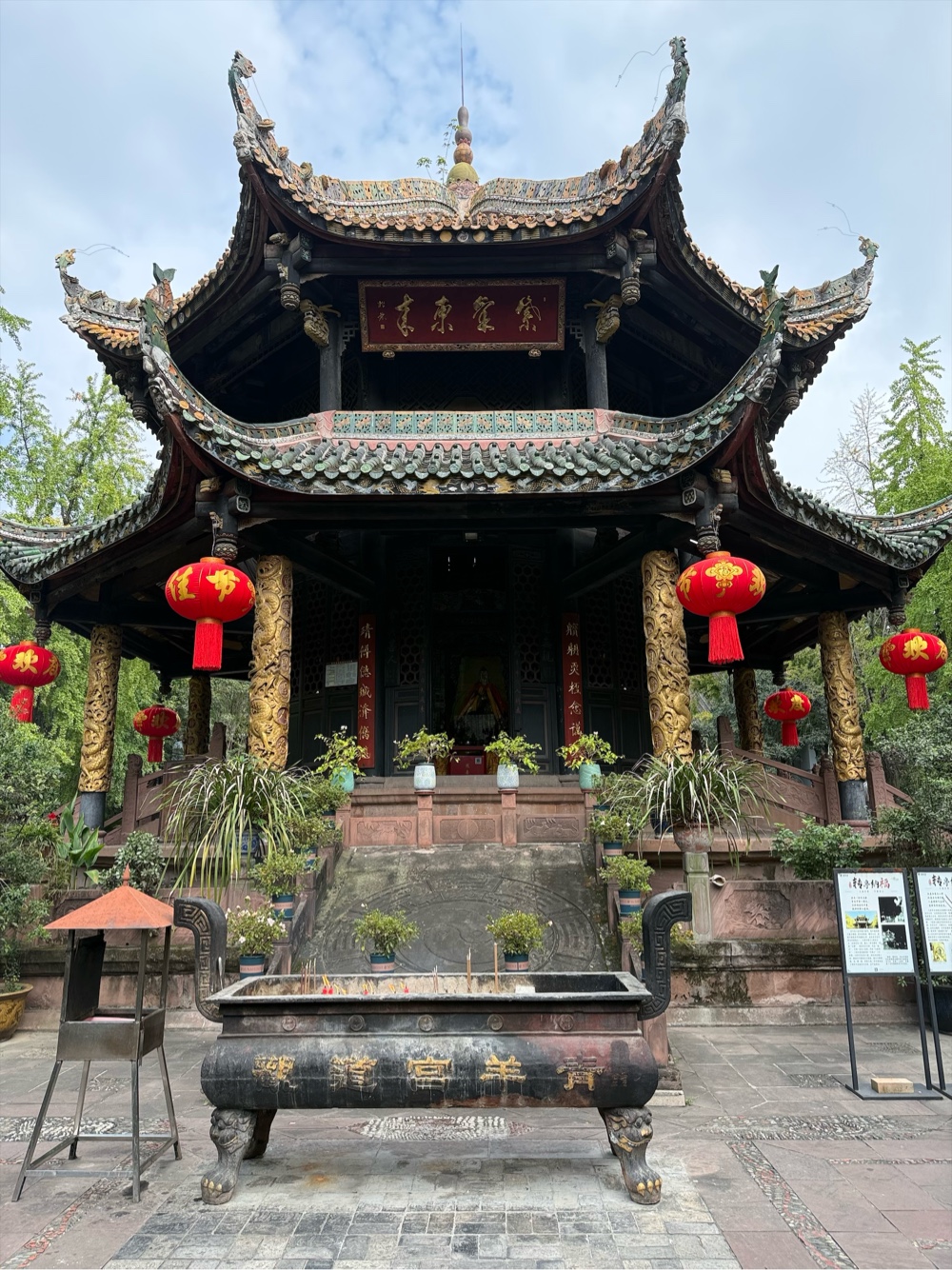 |
| Taoist temple |
The temple was a short walk from our hotel, the Wenjun Courtyard Hotel, located in the Qingyang historical area on what the Chinese call an “ancient street,” a street built to look as did hundreds of years ago before the area was flattened by war and grey high-rises sprung up all around it. Breakfast and dinner were served in a courtyard decorated with red paper lamps. Each each room sits on a balcony with a table decorated with flowers and little lamps. The $100 per night rate included a free upgrade to a suite, free airport pick up, free laundry and free breakfast.
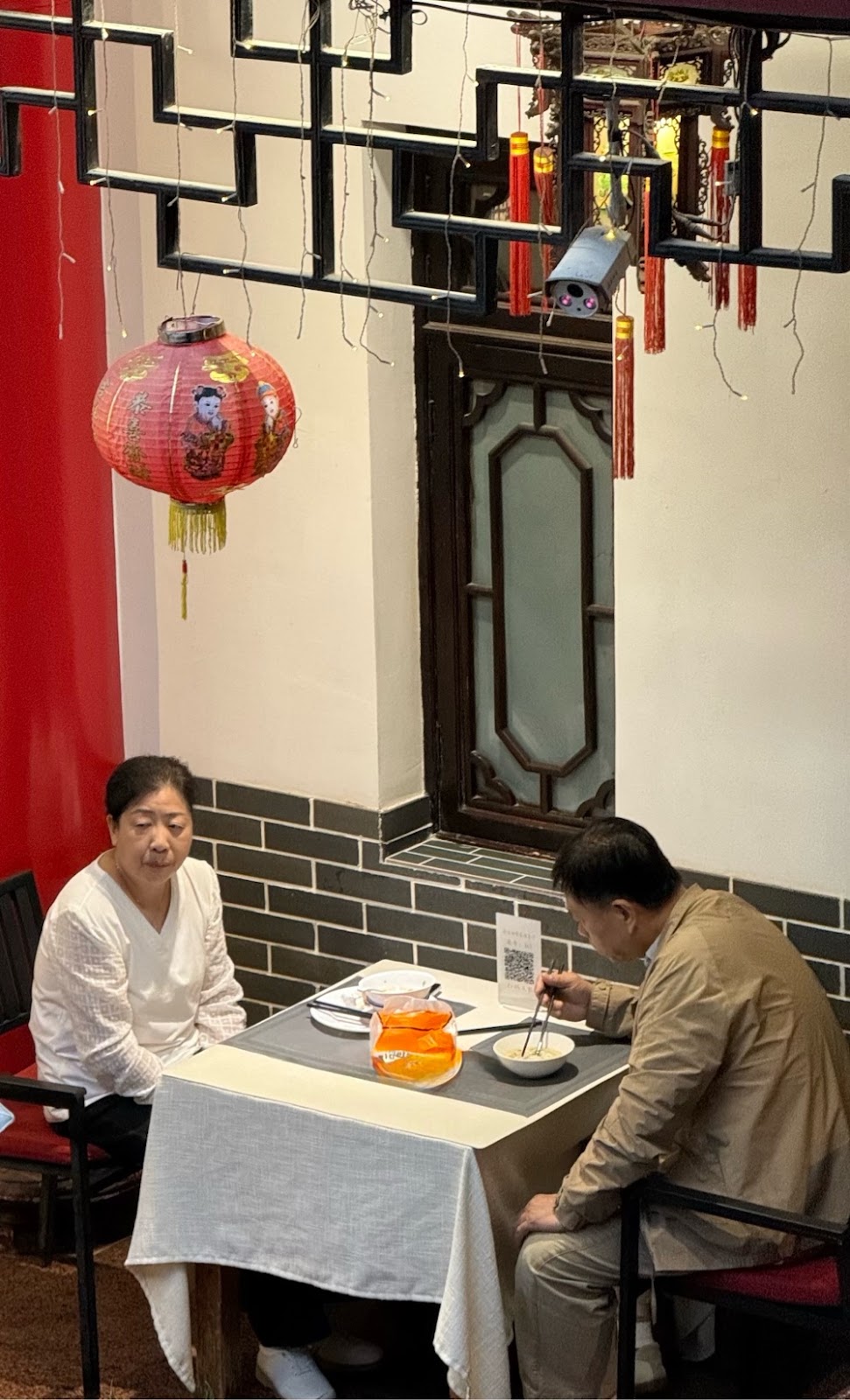 |
| Breakfast in the Wenjun courtyard |
Our evening with Siri began by meeting at a with a subway stop next to a night market in the downtown financial district that attracts an after-work crowd of young professionals
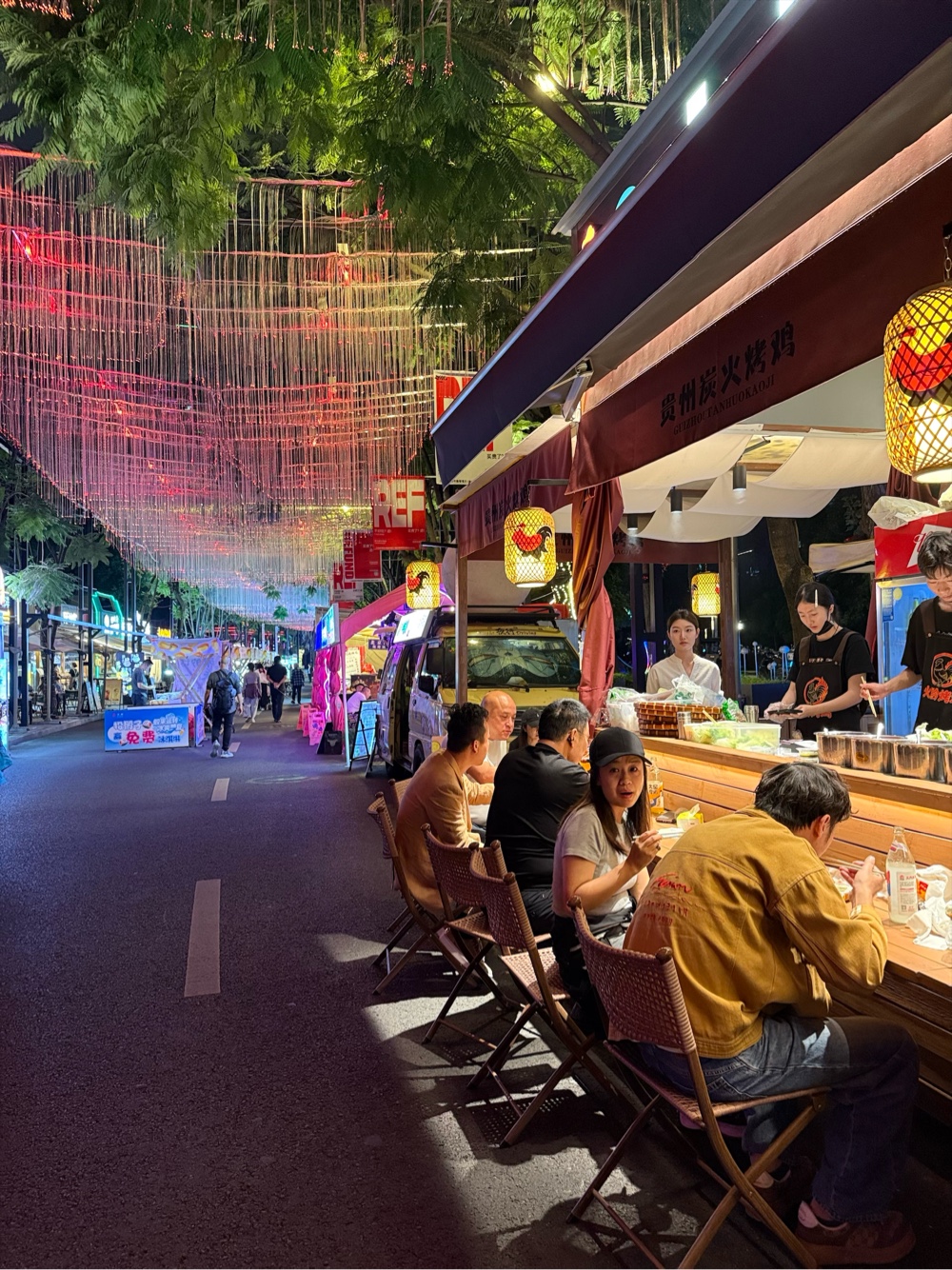 |
| A modern night market on a street that closes to cars in the evening |
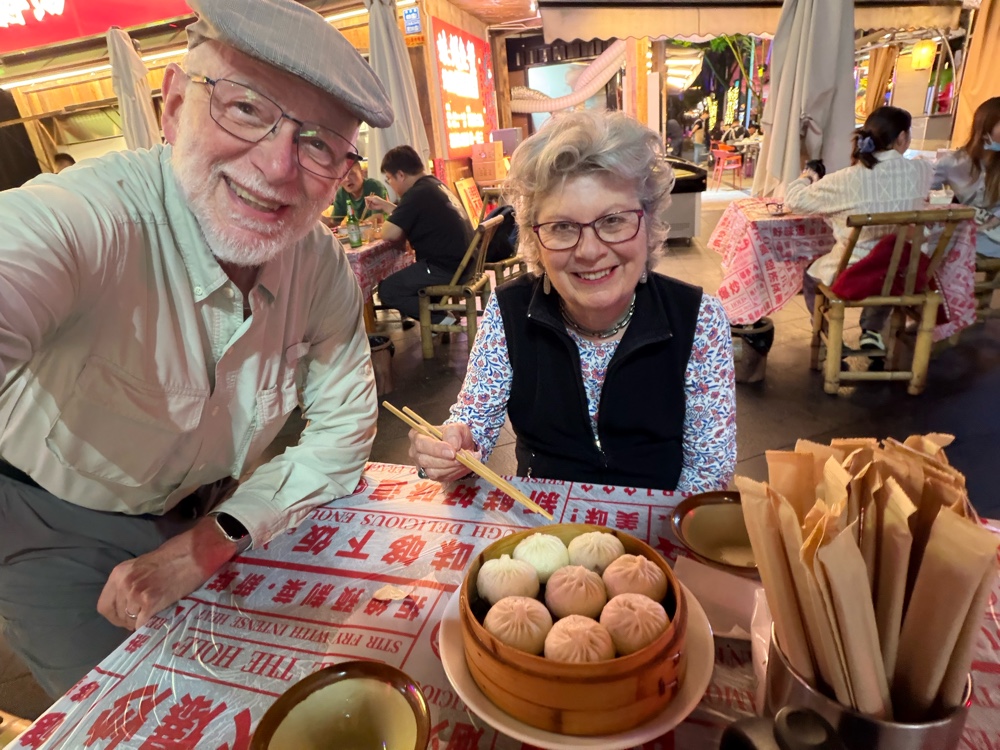 |
| Enjoying bao buns |
Bao dumplings filled with pork or veggies (8 for $2) were are favorites among the foods hawked from brightly-lit stalls set up under the flashing lights of blinking skyscrapers in an area called Jiaozi Park. Translated, it means Paper Money, a nod to the 11th century when Chengdu was the birthplace of the world’s first paper money.
After the market, Siri unlocked three blue city bikes available for a few cents per minute. We road along a paved path skirting the Jinjiang riverfront. It was there where we got our first glimpse of the Chengdu Twin Towers, a pair of 720-feet-tall skyscrapers that light up at night like giant media screens.
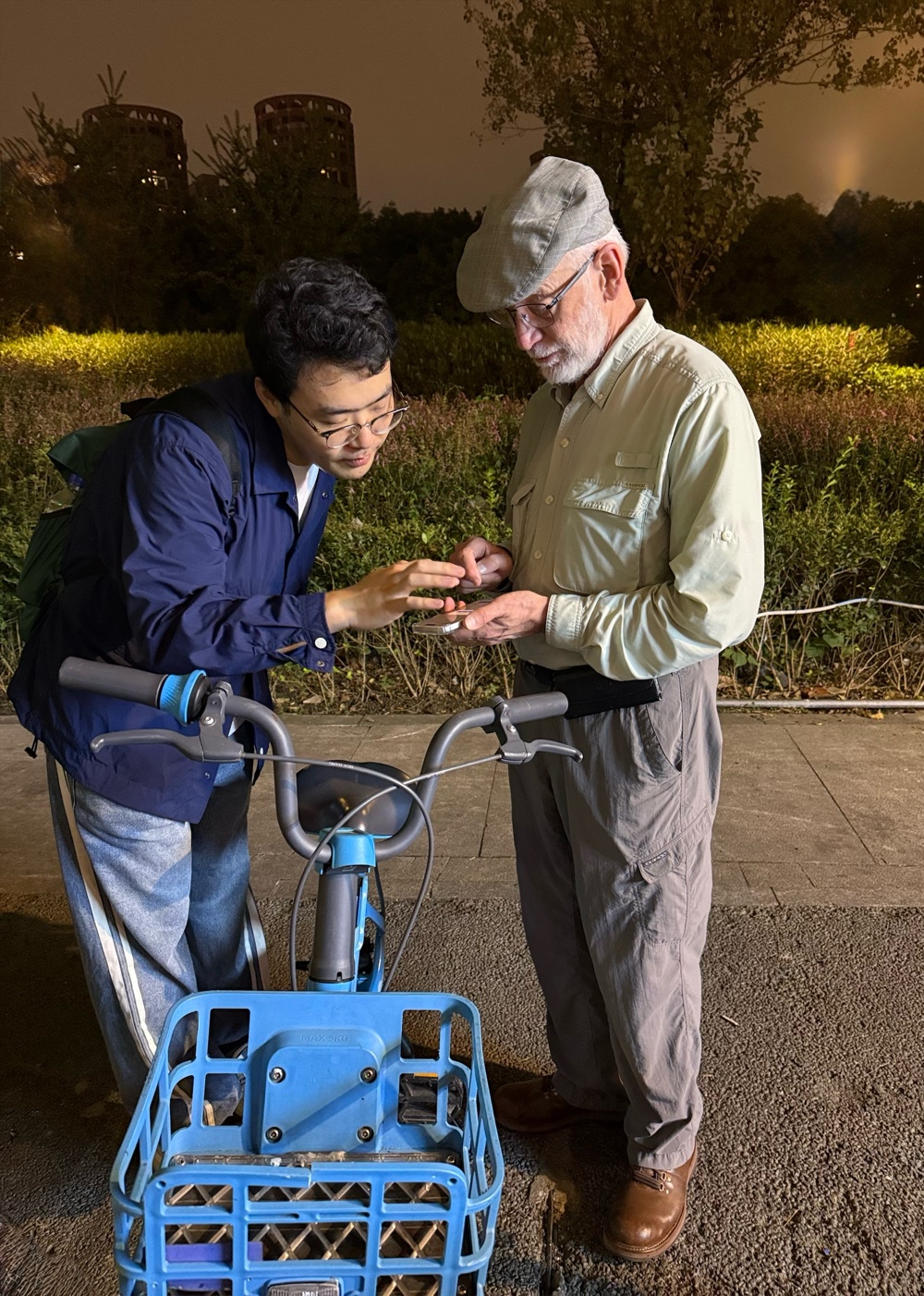 |
| Siri pays and unlocks city bikes using AliPay, China’ digital payment system |
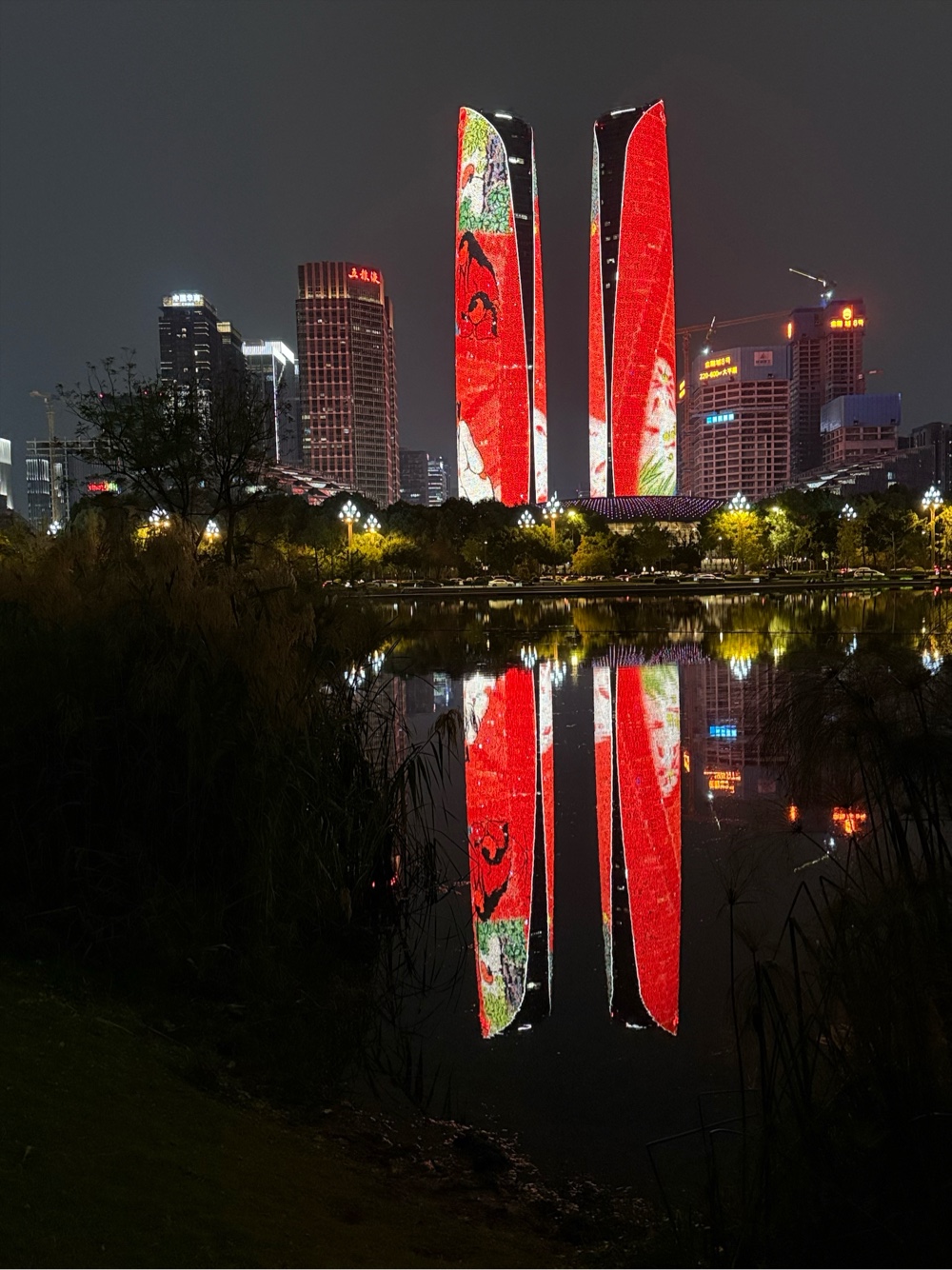 |
| The Chengdu Twin towers |
Parking the bikes, we walked along the Nine Leaf Lotus pedestrian bridge, part of a park that seems to be floating on water as the bridge incorporates nine lotus leaf-inspired platforms to connect two halves of a green belt divided by the river, linking the riverbanks to city streets, a flying-saucer-shaped bar, a library and theater.
The finale of the evening came as we picked up a new set of bikes, and road in a bike lane next to a four-lane highway to the New Century Global Center, a massive city within a building, housing a huge shopping mall, offices and residences. This is the best place to view the Chengdu Bamboo Fountain, six giant bamboo-shaped columns where water cascades downwards from the top to mimic falling rain on natural bamboo stalks. Bamboo is significant because Chengdu hosts one of the world’s largest habitats for giant pandas, and they survive mainly on the plant.
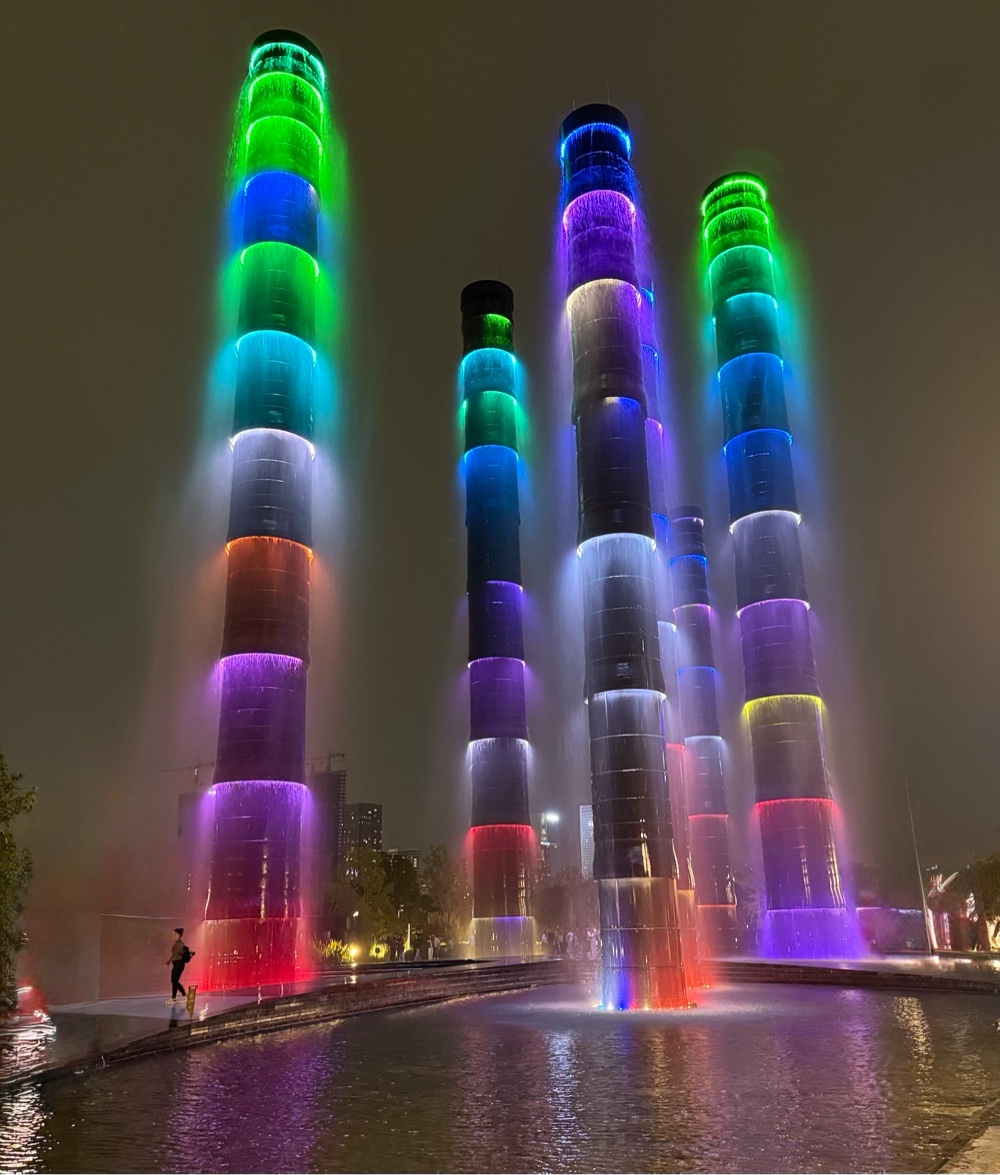 |
| Chengdu Bamboo Fountain |
After dark, the towers light up with color-changing LED displays that change every few minutes. Water, light and technology come together in a futuristic display, the perfect end to an evening exploring Chengdu’s ever-changing faces.
If you would like to leave a comment on this blog, please include your name somewhere in the text, otherwise comments show up as anonymous


No comments:
Post a Comment