Showing posts with label Canada. Show all posts

Aug 31, 2026

Ignore the Airbnb pushback; Choose wisely and everyone wins


An Airbnb in Taxco, Mexico. The owner lived next door

Should you feel guilty about staying in an Airbnb, given the pushback around the idea that they displace locals, create a shortage of housing and ruin neighborhoods once reserved for long-term residents?

Hotel industry lobbyists are winning support from city governments to restrict or eliminate Airbnbs in many places. Even consumer advocates, such as syndicated columnist Christopher Elliott, urge travelers go back to being tourists rather than "pretending" to live in a neighborhood at the expense of permanent residents."

I argued against those arguments in a recent blog post countering the assumption that Airbnb lost its way when it began opening up its listings to investors with hired managers. Some are, but many are owned by individuals supplementing their incomes by renting out a room, suite or mother-in-law apartment never intended as a full-time residence. 

 "How do you tell the difference?" a reader asked.

A classic Airbnb on Salt Spring Island in British Columbia

Making the right choice when choosing an Airbnb requires research, not only when it comes to ownership, but also the neighborhood, bottom-line price and refund policies. Do your homework, and you won't need to feel guilty about deciding on a spacious Airbnb as opposed to a tiny room in a high-priced hotel. The bonus is not only a larger, more private accommodation, but the chance for a unique cultural experience, especially if you are booking in another country,

Here's what to consider:

After searching for a listing that meets your criteria, scroll down to below the map showing the location to "Meet your host." My husband and I rented a suite in White Rock, British Columbia recently. The owner and her family lived in a house attached to the unit which appeared to have been remodeled to include a kitchen, bathroom and bedroom. The entrance was near the back of her house, and although the unit was well-equipped, I doubt that anyone would find it suitable as a full-time rental.

A typical Airbnb listing with photos. This was our White Rock Airbnb


A unit that is not owned by an individual but rather by a company that hires out the management might list their own name or the names of the same two or three different "hosts" on multiple listings. 

The studio apartment we rented a couple of years ago on Rua das Flores, the main pedestrian street in Porto, Portugal was one of several managed by the same people, a good indication that the owners were investors. The host, Sofia, confirmed she was a real estate consultant who, along with her parents, started buying up units on the street a few years ago.

The view from our Airbnb in Porto

We stayed three nights in the Airbnb and two nights in a small hotel owned and managed by a local couple. Both we lovely, but I admit I felt better about supporting the local innkeepers as opposed to the investors who likely did displace some permanent housing. 

Pricing

The initial price that appears on an Airbnb listing will not be the bottom-line price you see when you hit the "reserve" button. The initial listing will include the Airbnb service fee, but not taxes. Example: I have been looking at an Airbnb in Mexico City where the listed price was $$373 for thee nights. That jumped to $439 when I went to book and $67.12 in taxes were included. Some cities or countries have a per-day tourist tax required to be collected on-site. We discovered this in Malta last spring when the Airbnb owner left a note requesting that we leave 7 euros in cash on the kitchen table before leaving. 

Refund/Cancellation policy

Always check refund and cancellation policies which vary according to the listing. Many Airbnbs have liberal policies allowing for cancellation with a full refund up to a few days ahead of arrival. Pass on bookings that are non-refundable or return just a partial payment minus the Airbnb fees.

Check the reviews

Airbnb publishes all reviews, good or bad, from both customers and owners. Check them carefully as well as the dates they were posted. Only people who have actually stayed in the Airbnb can do a review, so there is no danger of fake postings. 

House rules and amenities 

Some hosts think of everything. Cindy, our host in White Rock, left blueberry muffins, grapes and cheese in the fridge along with half- and -half for coffee. Other hosts leave the cupboards bare except for salt and pepper. Almost all provide a code for opening the door rather than a key. Some make an effort at personal contact; others don't unless you need something. 

Coffee makers are one of the quirkiest variables. Some hosts provide easy-to-use drip machines with ground coffee; others, like Cindy, supply K-cups and a Keurig or Keurig--like coffee maker. Coffee purists tend to stock their units with complicated equipment such as elaborate espresso machines and whole bean grinders.

The most unusual non-amenity I have encountered was at an Airbnb on Salt Spring Island in British Columbia. The owner provided no indoor trash can, just an outdoor compost pile. Guests were expected to provide their own receptacle for taking coffee grounds or food to the compost pile, and pack everything else out when they left.


Jun 23, 2025

Fraser Country: City life gives way to rural adventures 30 miles from Vancouver B.C.


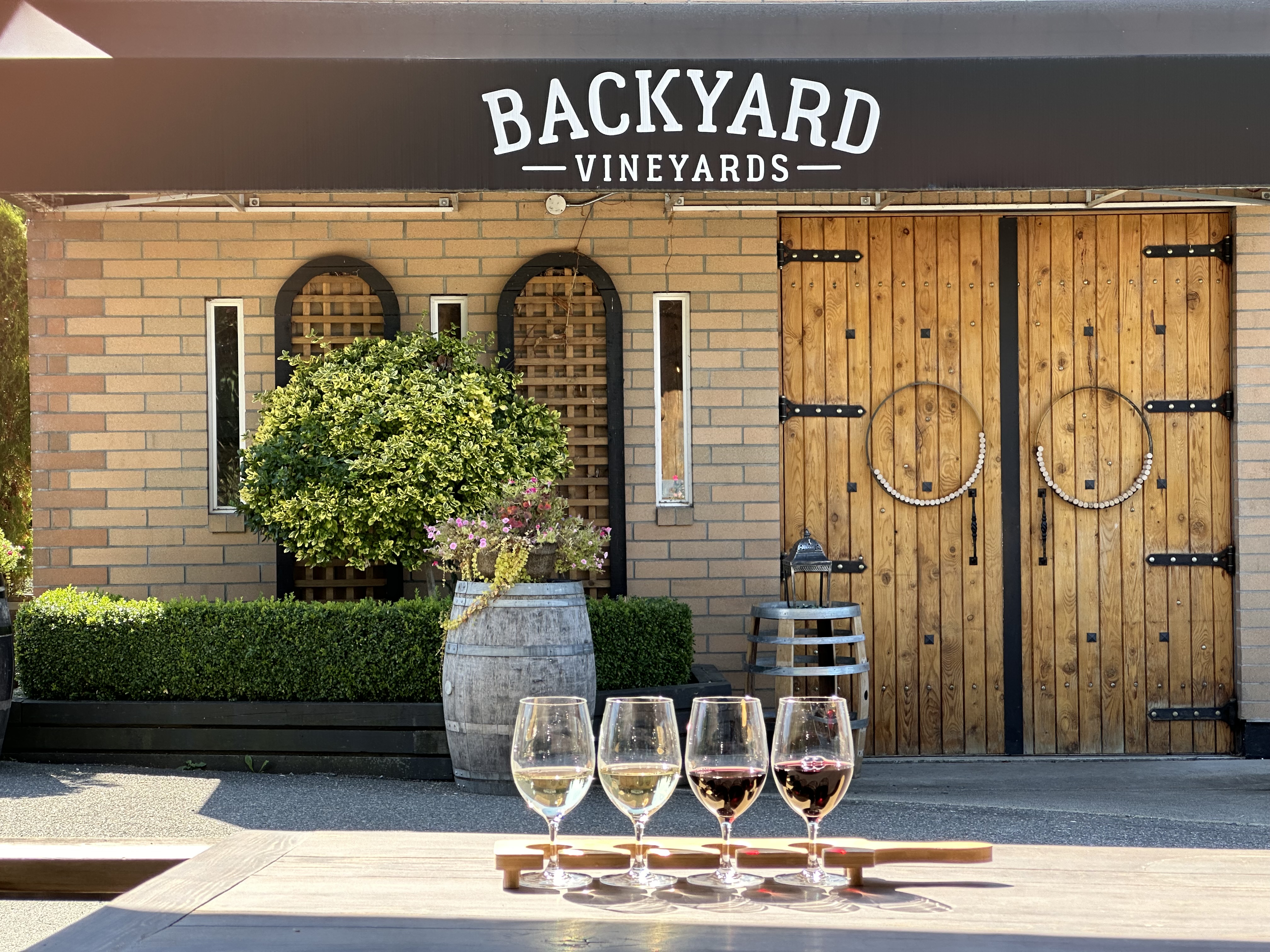
A winery and vineyard on the Langley self-guided farm tour

With spring flowers in bloom and summer approaching, those crossing the Canadian border towards Vancouver B.C. might want to bypass the usual urban adventures for a rural getaway.

Think visits to wineries and breweries; farm stores; and walks or bike rides along scenic river paths.

They call it Fraser Country, a fertile valley formed by the Lower Fraser River, running 90 miles between Vancouver and Hope B.C.

Build along a floodplain just 30 miles east of Vancouver are berry and dairy farms, dikes for biking or walking and outdoor tasting rooms surrounded by soaring mountains in an area commonly called the Lower Fraser Valley. 

Agriculture is the main focus, but visitors will also find golf courses, opportunities for sturgeon and salmon fishing; kyaking and mountain hikes, all within a short drive of the historic town of Fort Langley on south side of the river, and the suburban towns of Pitt Meadows and Maple Ridge to the north.

Downtown Fort Langley

Quaint Fort Langley brims with locally-owned cafes, restaurants, antique shops and bakeries.  It’s best-known as the home to the Fort Langley National Historic Site,  the former Hudson Bay Company's fur trading post declared by the British as the birthplace of British Columbia in 1858.   

Pitt Meadows and Maple Ridge, at first glance mostly  housing developments and strip malls, are hidden corners of tranquility nestled between the Pitt, Alouette and Fraser Rivers in the foothills of the Golden Ears mountains.

 Both sides, connected by the Golden Ears Bridge in what's known as the Lower Fraser River Valley, have their advantages. Fort Langley has more lodging. Pitt Meadows and Maple Ridge have fewer tourists.

Farm tours

Wherever you base, start your explorations by following the Langely Self-Guided Circle Farm tour, a roadmap to 16 farm stores, U-pick farms, wineries, breweries and more.      


Milner Valley Cheese

Among the many worthy stops is Milner Valley Cheese, a producer of farmstead cheeses made with pasteurized goat milk from the family’s herd of long-eared Nubian and Alpine goats. Visitors can pick up cheeses and ice cream in the farm store, then picnic in the garden while the goats are in the pasture, or peak into the milking parlor.

U-pick berry farms welcome visitors

The biggest farm store and U-pick farm in the area is Krause Berry Farms.  A tent set up next to a huge blue barn fills year-round with regulars who line up for freshly-made waffles pilled with strawberries or seasonal berries. Visit in the summer for U-pick strawberries, raspberries, blueberries and blackberries. 

Krause Berry Farms' strawberry waffle


Set in a wooded area overlooking a pond is Locality Brewing, a farm-to-glass brewery that grows its hops and barley in fields next to its rural taproom. Chairs and picnic tables are strewn around a  dog-friendly outdoor tasting room where a food truck with bison burgers pulls up in the afternoons.

Locality Brewing

Views of the Golden Ears mountains set the scene for relaxing  with a cocktail on a shaded patio at Roots & Wings Distillery, the first craft distillery in Langley Township. 

The tasting room is a single-wide trailer resembling a cabin in the hills of Kentucky. Inside are shelves filled with vodka, gin and whiskey bottles decorated with colorful labels picturing the mountains and a vintage tractor the owners once used to plow their fields. 

Partners Rebekah Crowley and Rob Rindt do  everything on Rob's family farm, from planting, growing and harvesting the potatoes and botanicals used in their spirits, to fermenting and distilling. 

Biking the dikes

With about 40 miles of interconnected trails, the Maple Ridge-Pitt Meadows dike system, seven miles across the Fraser from Fort Langley,  offers bikers many choices for rides along flat, mostly hard-packed gravel paths. 

Bike and walking path along the Pitt River

Built by Dutch settlers in the 1950s as a method of flood control, the dikes form an interconnected system of walking and bicycling trails along the Pitt, Alouette CQ and Fraser Rivers.

Let's go Biking, a website dedicated to easy rides around metro Vancouver, outlines a variety of rides of varying lengths with access points, directions and sights marked on printable maps. 

Doable in a half-day is the Ridge Meadows Circle route, a 20-mile ride along all three rivers, mostly on dikes and and a few roads with dedicated bike lanes.  

Starting at the planned community of Osprey Village in Pitt Meadows, cyclists pedal first along the banks of the Fraser, then along a narrow path in the forested Pitt River Greenway. The trail widens as it leaves the woods, and continues past a small airport, a cedar mill, blueberry farms and cranberry bogs along the Fraser and Pitt Rivers. 

Most scenic is at leg of the trail along the south side of the Alouette, the most peaceful of the three rivers, with views of Golden Ears in the late afternoon light. 

Cycling the dikes

Before or after a ride, take time to stop in Osprey Village for coffee and a snack at the Stomping Grounds Cafe & Bistro, or a gelato at Sweet Tooth Creamery. Stop in at the Pitt Meadows Art Gallery, a free community gallery supporting the work of local and regional artists.

Osprey Village 


 Hiking in Grant Narrows Provincial Park

Twelve miles from Osprey Village is Grant Narrows Provincial  Park, a dog-friendly wilderness area and wildlife habitat where the Pitt River meets the 16-mile-long Pitt Lake. 

A four-mile walk along the Katzie Marsh Loop starts in the Pitt-Addington Marsh Wildlife Management Area which supports more than 200 bird and 29 mammal species.

Along the Katzie Marsh Loop


The walk incorporates a hike along the Pitt River dike trail, a flat, wide trail of packed gravel, flanked on one side by the Pitt River, and the other by a marsh filled with watershields, rooted plants that float on the surface similar to water lilies, but smaller. 

To make the most of the scenery, be sure to take climb the wooden lookout towers to spot ducks, geese, herons and osprey.

Lookout tower for spotting wildlife


On the way to or from the park, plan a stop for breakfast, lunch or picnic supplies at Golden Ears Cheescrafters https://cheesecrafters.ca CQ where two Maple Ridge sisters make cheeses, curds and butter using milk from their dairy next door.

If this trip wets your appetite for more, consider exploring further east to Harrison Hot Springs, B.C.'s  resort community on the shore of Harrison Lake. 

From there, the Fraser River narrows at the town of Hope, the gateway to B.C.’s interior. Once a fur trade and gold rush town, it is known as the “Chainsaw Carving Capital” with 20 giant wooden sculptures scattered around town.

If you go:

Expect good value:  Fewer Canadians are coming to the U.S.  due to political concerns, but American visitors are being welcomed as usual.

Travel in Canada is an especially good value right now. Something priced at $1 Canadian costs just 71 cents U.S. based on current exchange rates.

Getting there: If Vancouver isn't on your itinerary, bypass the  Blaine/Peach Arch border crossing, and detour from Interstate- 5 to the Lynden / Aldergrove crossing. Fort Langley is 15 miles from the border. Pitt Meadows and Maple Ridge are a few miles north of Fort Langley, across the Fraser River via the Golden Ears Bridge.  

For general tourism and lodging information: See https://www.thefraservalley.ca  

Tourism Langley has info at https://www.tourism-langley.ca 

For Maple Ridge and Pitt meadows info, see https://www.travel-british-columbia.com/vancouver-coast-mountains/vancouver-area/maple-ridge-pitt-meadows/ CQ

Farm tours: Download a map for the Langley Self-Guided Farm Tour at https://www.thefraservalley.ca/wp-content/uploads/2025/04/Langley-Circle-Farm-Tour-2025-Guide.pdf CQ Seasonal hours vary so check websites before venturing out.

Trail maps: Let's Go Biking has suggested routes along the dike trails, along with maps and trail descriptions. See also http://www.alltrails.com  

Park info: The City of Pitt Meadows has information on Grant Narrows Regional Park at https://www.pittmeadows.ca/parks-recreation/parks-fields-facilities/parks-list/pitt-addington-marshgrant-narrows CQ


Apr 5, 2025

Vancouver repurposed Shipyards District welcomes spring visitors


 A yellow crane still sits in Shipbuilders' Square where the former copper shop houses the Tap and Barrel pub

Canadians may not be coming to the U.S. this spring due to hurt feelings over President Trump's tariffs and threats to annex the country, but there's no reason Americans should stay away from Canada. 

The exchange rate is favorable, and no, you won't feel as if you're not wanted. The Canadians my husband and I met on a recent trip from Seattle to Vancouver, B.C. were polite and friendly as usual. Of course we weren't driving a Tesla and didn't have a Trump/Vance bumper sticker on our car. Nevertheless, I didn't feel that anti-America feelings were translating into anti-American sentiments.

Our destination was North Vancouver, home the Lower Lonsdale neighborhood and the Shipyards District, a repurposed industrial area filled with hotels, restaurants, cafes, a historical museum and art galleries. 


The SeaBus crosses Burrard Inlet from the Vancouver waterfront


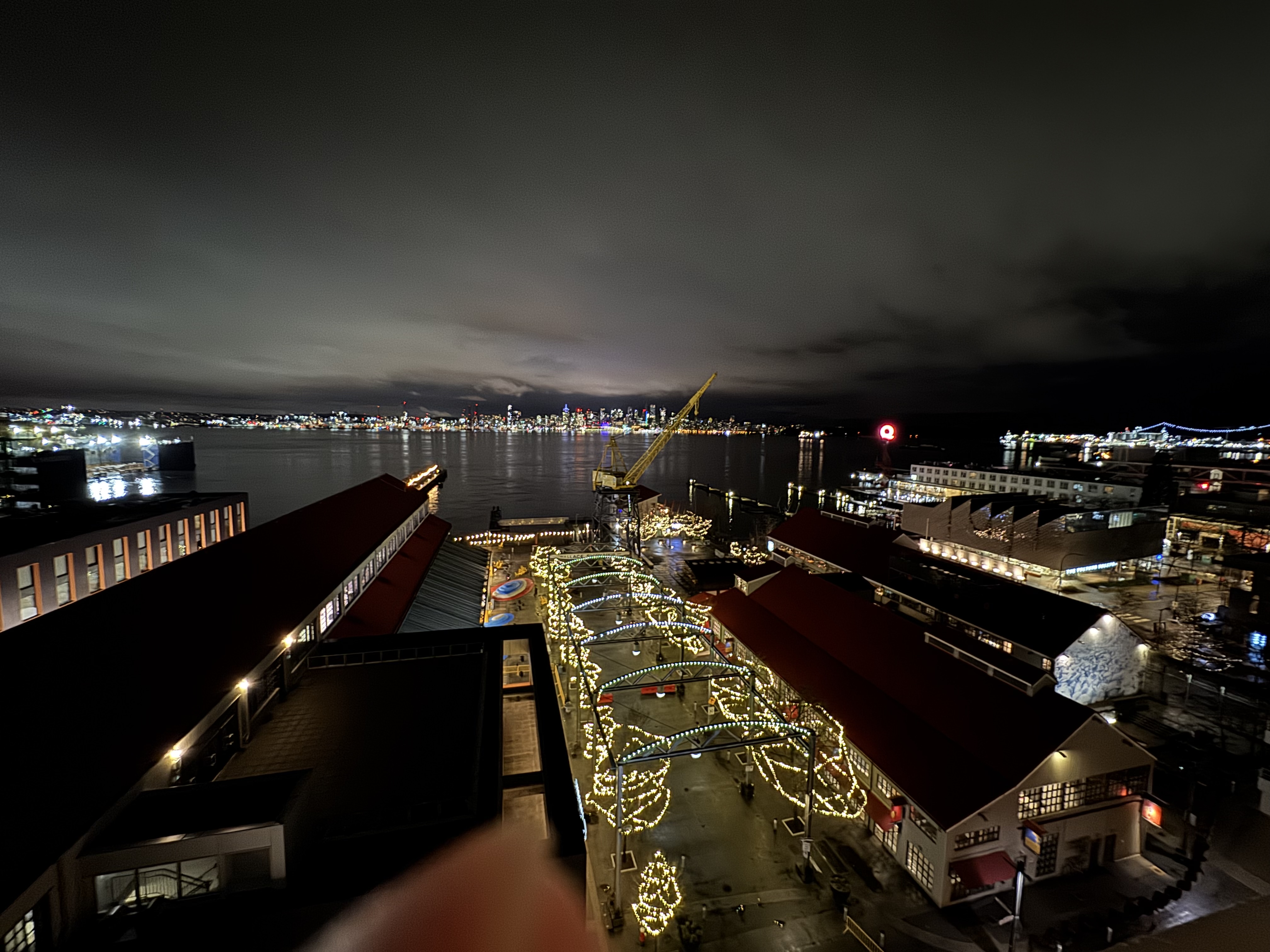
Anchored by the Lonsdale Quay Market & Food Hall, parks, public piers and community gathering spaces invite lingering on sunny days and relaxing by night next to blazing gas heaters and fire pits.

Day One; The Shipyards

Hope on the TransLink SeaBus for a 12-minute SeaBus ride across the Burrard Inlet from the Vancouver waterfront, and arrive 12 minutes later at the Lonsdale Quay.

Settle into one of three hotels. The Pinnacle Hotel at the Pier and the Seaside Hotel have  views of the Vancouver skyline lighted at night. The Lonsdale Quay Hotel is inside the market. If you drive, leave the car parked. Everything is within walking distance.

Get the lay of the land by taking a Taste Vancouver Food Tour, a walk that combines a walk through the Lonsdale Qua Market bites from restaurants, breweries, ice cream and chocolate shops with historical tidbits about the area.

The Lonsdale Quay Market

The Wallace Shipyard, opened here in 1906, and grew into one of the biggest industrial operations in Western Canada. Productivity peaked in World War II, and as demand for ships declined, the yard was sold in 1971 and closed in the early 1990s.

 A large yellow crane still sits in Shipbuilders' Square where the former copper shop houses the Tap and Barrel pub.  Named for the family that ran a tug boat business here in the 1900s is Cates Deck, a  plaza where visitors can relax with a beer or glass of wine.

The heart of the development is Shipyards Commons, a covered gathering spot that was once the machine shop. A community splash park open in summer converts to an outdoor ice skating rink in winter. The Shipyards Night Market takes place Friday nights from May 16 through mid-September with food vendors and live music.

Winter ice skating


Day Two: Bikes and brews

Rent E-bikes from Reckless Shipyards, and hit the North Shore Spirit Trail, a flat 20-mile paved greenway for cyclists and pedestrians. Head west through Waterfront Park just past the SeaBus terminal, then through residential areas with views of Grouse Mountain to the north. Follow the trail under the Lions Gate Bridge and through a wooded area along the Capilano River. Container ships heading into Vancouver come into view at Ambleside beach and village, a good stop for coffee or lunch before heading back.

The North Shore Spirit Trail

For a light dinner, check out out one of the Shipyards happy hours, then spend the evening exploring the Lower Lonsdale neighborhood and the North Shore Ale Trail.


Along the North Shore Ale Trail

Popular with locals are seven garage door-style local breweries, a distillery, a winery and a cidery. Favorites include dog-friendly North Point Brewing with an outdoor deck, and the tiny Streetcar Brewing, named for the vintage street cars that took shipyard workers up the hill after their shifts. 

Chicken sandwiches from Cream Pony

Order a fried chicken sandwich or lemon curd donut from Cream Pony next door and settle in around the fire pit with a low-alcohol peach radler, the brewery's take on a German-style mix of beer and lemonade.

Day Three: Culture crawl

Start with a breakfast of salmon or avocado toast and at Nemesis Coffee next to the Polygon Gallery, the North Shore's premier art and public cultural facility operated by the British Columbia Photography and Media Arts Society. On now though May 25 is an exhibit dedicated to the work of Nigerian photographer Rotimi Fani-KayodeThe first-floor boutique is one of the area's best destinations for finding quality North Coast native art, jewelry, pottery, clothing and skin care products made by Canadian artisans. 

Nearby is the Inuit Gallery of Vancouver with a museum-quality collection of Inuit, Northwest Coast First Nations and other Canadian art. 


Vintage street car at the Museum of North Vancouver

A block away is the Museum of North Vancouver with a permanent collection of exhibits tracing the area's history, beginning with the economic contributions of the Squamish Nation and Tsleil-Waututh people.

A volunteer gives visitors guided tours

The museum's centerpiece is a restored vintage street car that ran along Lonsdale Avenue from 1912-1946. Car 153 was one of 13 street railway cars which carried passengers from the ferry wharf to Upper Lonsdale and the Capilano Canyon. 

Decommissioned in 1946, it was sold for $150 and was being used as a chicken coop when transit historian and Vancouver bus operations manager Brian Kelly found it in a farmer's field.

The City of North Vancouver purchased the car, and stored it for 33 years until it was restored and given a permanent home in the museum. 


Nighttime view of the Vancouver skyline from the Shipyards District

If you go:

If coming without a car, take the SeaBus, a passenger-only ferry that runs daily between the Vancouver waterfront and the Lonsdale Quay every 15 minutes.  See https://www.translink.ca/schedules-and-maps/seabus for schedules and fares.

If driving from downtown Vancouver, take the Lions Gate Bridge (BC-99 N) to Marine Dr and Chesterfield Avenue in North Vancouver. Nearby sites include Grouse Mountain and Capilano Suspension Bridge Park.  

Visit Vancouver's North Shore Tourism Association for more information


Mar 13, 2025

Travel in the Time of Trump


Trump featured on the cover of a Mexican newspaper 

The year was 2017, and my husband, Tom, and I were in Myanmar, floating along the Irrawaddy River from Mandalay to Began.

Donald Trump's harsh immigration policies and his "Muslim" travel ban were just starting to take hold.

American travelers like us were finding it hard to muster a sense of pride as he upended the reputation of the United States as a country welcoming all.

What should we do? I asked myself. 

The situation today is far worse than it was then, given arrests, deportations, cuts in U.S. aide overseas and threats against Canadian and European allies. But the answer is the same: Keep on traveling. 

Real Americans, the ones who make an effort to get to know people of different religions and cultures, whether at home or abroad, are our country's best ambassadors. Now, more than ever, our country needs us. 

As travelers, it's our job to show the world that Donald Trump's and Elon Musk's rhetoric, policies and attitude do not reflect who we are - as a people or a country.

This is not to say that we shouldn't take the normal precautions to stay safe and minimize problems. Nor does it mean we shouldn't expect not to be questioned about what is going on with the U.S. Trump's  picture appears on the front pages of papers everywhere, accompanied by stories written in a language that we might not understand.

I do believe, however, that if anti-American sentiment builds in countries popular with travelers, it most likely will be directed towards the U.S. government rather than individual travelers, given people in many parts of the world don't admire their own leaders.

So, what can we expect? Some hassles, to be sure if the Trump administration impose new rules or bans on travel for citizens of other countries. Being revived in a long- dormant rule that Canadians staying longer than 30 days in the U.S. must register and be fingerprinted.

European countries participate in the same visa waiver program for Americans as the U.S. extends to European citizens. If Trump is serious about stopping immigrants from entering the U.S., will he begin requiring our allies to apply for visas?  

As always it pays to be aware of our surroundings, make efforts to blend in, follow local customs and check U.S. State Department travel advisories.

What I refuse to buy into are scare tactics about the "dangers" of travel due to expected or perceived anti-American sentiment. Unfortunately this is a narrative gaining traction, manly as a result of media reports not based on actual examples, but rather what might or could develop.

Most disappointing are some recent reports by Christopher Elliott, a traveler consumer advocate whose columns I usually admire.

His latest, accompanied by a cartoon of a group of men dressed in black staring down a tourist, began with a story of a guy who visited İzmir, Turkey who suddenly found himself in the wrong place at the wrong time.

He'd taken a casual stroll through the streets of the coastal city on a Saturday morning, but when he turned a corner, he was confronted by a group of young men who looked like they were up to no good.

"American!" one of them exclaimed. Another one shouted, "Donald Trump!"

 "I was the guy," Elliott wrote. "And, say experts, if you're not careful, it could happen to you."

The first red flag in this story was the line "experts say. The second is what Elliott characterized further down in the story as a "small disclaimer." 

"Although my would-be assailants made references to my nationality, that wasn't the real problem. I didn't have a clue where I was going and ended up in the wrong part of town. Many, if not most, incidents of anti-American behavior are the result of ignorance," he acknowledges. "There are places foreign visitors should avoid, and knowing where those places are is more important than ever."

Fair point, but hardly enough to raise the question, as he did in a previous column, "is it safe to go ANYWHERE?"

Elliott admits that "it is difficult to measure anti-American sentiment in a systematic way. It's more of a feeling -- the stares, the hostile reception, and perhaps more confrontations about U.S. foreign policy," he says.

Not to seem naive, which by now you may think I am, but this sounds like a self-fulfilling prophecy - the psychological phenomenon that occurs when a person's expectations lead to their own actions, which then make those expectations come true.

So back to the question, what can we do other than pretend we are Canadian? 

We can work harder than ever when to connect with people living and working in the countries we visit. We can support them by booking local experiences, hotels, B&Bs etc. that are owned by locals rather than chains owned by U.S. companies. 

My husband and I will be traveling in Spain and Morocco this year.  Besides signing up for some small-group walking tours led by locals in Fes, Tangier and Rabat. I've booked a dinner with a Moroccan family in Fez through the website eatwith.com. The riads (traditional Moroccan courtyard inns) we booked are family-owned. In Spain,we will spend five days helping Spanish professionals improve their conversational English through a program called VaughanTown set up by Vaughan Systems, the largest language training service in Spain.


I will also be traveling on assignment soon in Vancouver, B.C. No doubt I will see signs in the  liquor stores notifying customers that no American products are being stocked. Maybe I'll go to a cafe and order a Canadiano instead of an Americano. 

When I'm not traveling, I volunteer at Seattle-Tacoma International Airport, guiding passengers to their gates or solving any problems they might have.

"Thank you for being nice,"  a woman said to me the other day.

 Perhaps that's the best advice of all. 


Jun 13, 2023

City escape: Rural delights await in B.C.'s lush Fraser River Valley


The former Canadian Northern railway station, built in 1920, was moved to its present location in downtown Fort Langley.

We love Vancouver, B.C.'s city vibe, but a few years ago, my husband and I decided to bypass the urban adventures for a weekend in the British Columbia countryside.

Fifty miles east of Vancouver, we discovered the rural Fraser River Valley and the suburbs Pitt Meadows and Maple Ridge. At first glance, they seem to be a mish-mash of housing developments and strip malls, but a little research turned up hidden corners of tranquillity in the foothills of the Golden Ears mountains. 

Here we found dairy farms, nurseries, cranberry and blueberry fields on a giant flood plain protected by  dikes, long stretches of raised earthen mounds surrounded by farmland.

Built by Dutch settlers in the 1950s as a method of flood control, the dikes form an interconnected system of walking and bicycling trails along flat, mostly hard-packed gravel paths.

Fast-forward to our first return trip to the Fraser valley since the pandemic ended. This time, we found some new discoveries on the opposite side of the river around the quaint village of Fort Langley.

Since Vancouver wasn't on our itinerary for this time, we avoided the city by bypassing the Blaine/Peach Arch border crossing, and detouring from Interstate- 5 to the Lynden / Aldergrove crossing. Fort Langley is 15 miles north of the border.

The village brims with locally-owned cafes, restaurants, bakeries and tasting rooms, tempting visitors here to tour the Fort Langley National Historic Site, the former Hudson Bay Company's fur trading post declared by the British as the birthplace of British Columbia in 1858.

How to decide where to go when passing through for just a few hours? Chew On This Tasty Tours offers a roadmap for a self-guided, multi-stop walking tour called Local Flavour. 

Visitors are provided with a map and a timetable for appointments at sit-down and takeaway food and drink stops along with suggestions for visiting historical sites, art galleries and taking  scenic walks. Food, drinks, admission fees and surprise gifts are included in the $88 per person price. 

“It’s designed to have a day planned for you," says owner Lise Hines.  "You don’t have to think about it. Just show up, and hopefully after a taste of the town, you'll want to come back and spend more time exploring."

A couple celebrates their anniversary at the Little White House


We covered only about a mile of actual walking over several hours of tasting and sipping. Tours usually start with high tea at the Little White House, an eclectic clothing and home goods boutique with tables tucked into a cozy rooms and gardens. Guests have an hour to enjoy tea along with a tiered platter laden with scones, clotted cream, savory sandwiches cookies and macaroons.

A blacksmithing demonstration at Fort Langley National Historical Site

Other stops might be tailored to individual interests. After a walk through the Fort Langley Historical Site for hands-on gold panning and blacksmithing demonstrations, our itinerary called for a  stroll past shops and cafes in historic heritage houses along Mavis Street to the Kizmit Gift Gallery for a look at the work of Canadian potters, jewelers, painters and craftspeople.


Heritage buildings house cafes and shops along Mavis Street in Fort Langley


Baker Robert Giardino

Next came a stop a La Focacceria, where owner Robert Giardino  bakes and sells Italian Puglia-style flat bread studded with olives or roasted tomatoes. Giardino steps away from the ovens to hand out small bags of bread made with two types of flour imported from Italy, and gives a short explanation of the difference.

At visit to BC Buzz Honey, a maker of raw, unpasteurized honey produced by Fraser valley bees, came with a short lesson on the medicinal properties of ginger and raspberry honey. Following this was a relaxing sit-down wine-tasting and light lunch at Valley Commons, and Okanagan winery.

Republica's cafe in Fort Langley's Gasoline Alley

Rounding out the afternoon was a stop for iced lattes at Republica Coffee Roasters, and finally a visit to Into Chocolate for samples and a nostalgic browse through shelves stocked with vintage candies. 

When Hines started her business in September, 2020, "I wanted to see what I could do to help small businesses" struggling through the pandemic, she recalls. "Fort Langley has no cookie-cutter businesses," a reason she makes sure the owner or an  employee is on hand to greet visitors at the expected times. 

"I call them businesses with a face."


Farm-to- glass wines and spirits

The Fraser valley is a prime wine grape-growing area. Outside of town, several wineries welcome visitors into their vineyards for tastings, live music and meals. 

Bacchus Bistro serves lunches and dinners in an elegant dining room overlooking the vineyards at the Chaberton Estate, the valley's oldest winery with an outdoor picnic area. 

Close to the U.S. border crossing, Vista d’oro's vineyard is surrounded by fields on one side and Campbell Valley Regional Park on the other. Accompanying wine and cider tastings is "pizzam," a pizza creation with local artisanal jams spread on a crust topped with savory toppings and cheese.

Unique to the area is Roots and Wings craft distillery which partners Rebekah Crowley and Rob Rindt run on the farm that has been in Rindt's family for three generations. 


Stillmaster Rebekah Crowley

First came fruits and vegetables, followed by the transition to a sod farm Rob runs with his five brothers. Then one day while pondering ideas for a side business, he turned to Rebekah, and said "Do you think we could make vodka?"

The couple spun off a few acres next to the turf farm to grow potatoes and corn fed by natural spring water. She enrolled in distilling classes at Prohibition University in Kelowna.

Their goal: Do everything on site- from planting, growing, harvesting, mashing to fermenting and distilling.

When the law changed to allow distilleries on agricultural land, they were ready in February, 2017 to open Roots and Wings, the first craft distillery in Langley Township, five miles from the village of Fort Langley.

Starting with a 30-gallon copper kettle still bought online and shipped from Kentucky, they released their first spirit, a potato and corn vodka, called Vital Vodka named so for being "absolutely necessary for lounging or letting loose. "

Graduating to a 500-gallon still, they now produce 40 variations of locally-produced spirits from crops grown on their farm plus botanicals, wormwood (for their 72 percent proof absinthe), dill, mint, Russian garlic, horseradish and rhubarb grown by Rebekah mother, Marg Crowley, on her property down the road.

Rob, 39, is the "roots," a life-long farmer whose favorite drink is a plain potato vodka, while Rebekah, 43, with a technology background, is the "wings," the still master who dreams up new flavors and cocktail recipes printed on cards slipped in with bottle purchases.

Views of the Golden Ears mountains set the scene for relaxing outdoors with a cocktail on a shaded patio furnished with bright green umbrellas and red Adirondack chairs. Next door is an indoor sipping and snacking area inside two repurposed shipping containers.

Tasting room with bottles stacked floor-to-ceiling

The main tasting room is a single-wide trailer resembling a cabin in the hills of Kentucky. Inside are shelves filled with bottles decorated with colorful labels picturing the mountains and a vintage tractor they first used to plow their fields. Unique is a line of savory vodkas. There's dill pickled vodka, black garlic, horseradish, five pepper and truffle vodka.

"It's an ever evolving situation," says Rebekah. "We don't have investors, so it's just Rob and me pulling up our bootstraps and making things happen."

She works to come up with a name and a story behind every spirit and many of the drinks on an extensive menu of cocktails and flights.

There's Johnny Handsome whiskey described as "rough around the edges but deeply refined kind of spirit with the soul of a centenarian and the body of a barrel-chested Viking that will knock you off your feet." 

Cocktail time at Roots and Wings

A cinnamon whiskey and blueberry liqueur cocktail called  Wellers Streusel takes its name from Rob's grandfather Gert Weller who had a blueberry farm in the area, now run by family members as a U-pick farm in summer. 

"Man- o -War" - a bottled pre-mixed cocktail with bourbon, vermouth, orange liqueur and lemon - includes a dash of farm-grown horseradish ground by hand by Rob until his eyes watered.

The tasting room and bar store is open year-round. New additions include a vintage rail car installed in the back as a stage or live music events.

Planned for the winter holidays is a release of a peated whiskey made with smoked peat from a bog under Rob's grandfather's blueberry farm. 


Tourism informationTourism Langley 

Where to stay: Bed and breakfasts, motels, Airbnbs and RV parks offer many options. For a quiet farm stay, consider Sage & Solace, and organic farm with two guest suites, a pond, picnic areas and farm animals. 


Aug 17, 2022

Island Time: Canadian artists open their home studios to visitors

Salt Spring Island potter Francine Hampson-Reid at her backyard kiln

Wearing a pair of railroad-style overalls, her hair pulled back in a red bandana, potter Francine Hampson-Reid pops out of her studio to greet visitors.

 "You found us," she shouts. 

So far, my husband and I were having no trouble following a self-guided artists' studio tour on Salt Spring Island, the largest of the Canadian southern Gulf Islands in British Columbia.

But when we approached Reid's Mudpuppy Studios, and saw a sign for the Harbor House Hotel, we were a little confused.

"We are not a hotel," she laughed.

Turns out, her spouse, John Reid, collects vintage signs. There's a Sweet Arts Cafe sign hanging above their sauna in back, and another for Belcher Bob's Chili outside her gallery.  

Salt Spring is home to dozens of artists, artisans and crafts people, most of whom sell their wares at galleries or at the Saturday Market in the main town of Ganges, But for travelers with time for more than one-stop shopping, the studio tour takes visitors behind-the-scenes where there's always a backstory.

Blue and white numbered sheep signs posted along the roadside point the way to the homes of 20 potters, glass artists, cider makers and cheese mongers, none more than a few minutes drive from the other on an island that's just 17 miles long and nine miles wide. 

 "It's a way for tourists to know we're here," says artist Mark Lauckner who blows, casts and presses glass at the Glass Foundry, just past Laughing Daughters Gluten Free Foods off Upper Ganges road. 

Many artists open their home galleries to visitors, but those who participate on the tour must live where they work, make at least 80 percent of what they sell on site and commit to regular opening hours, he says.

Mark Lauckner in his gallery on Salt Spring Island

Lauckner uses recycled scrap window glass and an energy-saving electric-powered furnace to produce coastal giftware such as starfish, seahorses, slugs, bowls and vases. A small table filled with scrap glass invites kids to design their own fused glass plates. 

His backstory involves hundreds of colored glass insulators  lined up on rows of shelves outside his gallery.

Glass insulators on display at the Glass Foundry

Now collectors items, they were used between 1920 and 1950 on telephone and telegraph lines to prevent wires from touching poles. For those curious enough to to know more, Lauckner unlocks a side door leading to a small museum housing Canada's largest collection of  insulators (3,000),  all neatly labeled with explanations of their historical significance. 

Not far from St. Mary Lake, one of two large lakes on the island, Francine Hampson-Reid of Mudpuppy Studios walks visitors through an explanation of how she crafts wheel-thrown stone dinner and cookware in "runs," one day pie plates, the next day mugs or bowls.

After an initial firing in an electric kiln, the pieces are fired again using an ancient German technique of mixing salt and baking soda in a backyard propane gas-fired kiln cranked up to 2,350.The salt vaporizes and interacts with the clay to create unique and unpredictable designs. The firing takes place over a three-day period. The kiln has to be monitored for heat control which the couple can do while sitting in their sauna. 

Reid's tea pot and mugs fired with a process that mixes salt and baking soda

Finished pieces are for sale in their "gallery" consisting of two glass cases in the hallway of their home next to the pottery studio.  Among items for sale are tea pots with wooden handles crafted by John Reid from Madrona trees on their property.  

Cheyenne Gol makes bags from recycled Harris Tweed jackets


Close to Ganges is Cheyenne Goh's Tweed & Bananas workshop where the Singaporean transplant works in a garage decorated with an oriental rug and vintage suitcases to "upcycle" fabric scraps, old kilts, tweed jackets, and most anything people drop at her door.

"From the beginning I have been into recycling and upcycling," she says, a passion that evolved while she worked with non-governmental organizations to teach Indonesian villagers to recycle paper and make paper products that were sold to hotels and galleries. 

Her signature items are bags fashioned from Harris Tweed jackets, incorporating the lapels as a design detail. Sleeves from jacket cuffs become small purses. Old neckties become holders for key fobs. Upholstery samples dropped off by a company closing its business are fashioned into clutch purses.

Her next project might involve what to do with an elegant silk Japanese wedding kimono that's been sitting on a shelf waiting for an idea. 

"I see something," she says, "and I want to figure out what to do with it."


Explore north and south

The studio tour is an opportunity to explore the far north and south ends of the island, just a 45-minute drive in either direction.

Feeding the goats at Sunset Farm

At the northern tip is Sunset Farm where the owners raise sheep fed on native grasses along with pet donkeys, horses, and goats. For sale in a small shop next to the farm is wool for knitting or felting; sheepskins, socks, blankets and pillows.

Facing Vancouver Island and Vesuvius Bay is the Zak Studio where Margo Zak, a ceramicist since college days in Manitoba, crafts functional hand-built porcelain vessels and Dan Zak, a retired architect, paints watercolors, using abstract touches to interpret natural scenes around Salt Spring, Tofino and other Canadian destinations.

Margo Zak hand- builds porcelain pottery in her home studio on Salt Spring Island

A flight of wooden steps leads to the contemporary house which Dan designed to include a home gallery and studios for each of them. Margo works downstairs building tubular vases, mugs and pots, glazed on the inside so they can be used for holding liquids. Dan works upstairs, painting and making his own borderless frames for his watercolors.

Heading south, closer to Fulford Harbour and Ruckle Provincial Park, with trails and ocean views, are two worthy refreshment stops.

Former restaurant owners Michael and Rie Papp operate Salt Spring Shine, a craft distillery https://saltspringshine.com with spirits made from fermented local honey. Stop by to see their small still, and sample their gin, vodka, honeycomb or apple pie moonshine.

Spirits distilled with fermented local island honey

Furthest south and perhaps the most remote location on the tour is Salt Spring Island Cheese in business on the island since 1996. Travel a woodsy road past farm stands selling coffee, books, firewood and homemade jams, then veer off on a one-lane road, park and walk up the hill to the farm where the owners raise goats and make cheeses delicately decorated with flowers and herbs.

Cheese as art on Salt Spring Island


Visit the goats, watch the cheese-making process, and picnic in the garden with a pizza from the farm cafe or a slice of fresh goat cheesecake. 

If you go:

Salt Spring island lies in the Strait of Georgia between mainland British Columbia and Vancouver Island. It's the largest of the Southern Gulf islands, connected to the mainland and Vancouver Island by ferry. Getting there takes some time, so plan on a two or three- night stay.

Border policies: The Canadian government says existing Covid-related border restrictions will remain in place until at least Sept. 30. That means most U.S.travelers will need to provide proof of being fully vaccinated to enter the country. 

The government requires all travelers to upload their vaccine information and travel documents to the ArriveCAN app within 72 hours of arrival. If you don't have a smart phone, you can sign in to ArriveCAN from a computer to get an ArriveCAN receipt to print and take with you. 

Remember to bring your passport or enhanced state drivers license when crossing the border.

Ferry reservations: There are three towns with ferry terminals on Salt Spring. Ferries call between Tsawwassen CQ in Vancouver, 135 miles north of Seattle, and Long Harbour on Salt Spring (the most direct route); Swartz Bay (Victoria) and Fulford Harbour; and Crofton (on Vancouver Island) and Vesuvius Harbour.   

Visit the artists: Pick up a map on the ferry or in Ganges showing locations of 20 artists and artisans on the Salt Spring Studio Tour, or click here to for an online version and artists' profiles.  Opening hours vary, so check the listings before visiting. 

Exchange rates: A favorable exchange rate makes Canadian travel a good value for U.S. travelers. The current rate is 78 U.S. cents to one Canadian dollar.

This article appeared in the Seattle Times on Aug. 18, 2022.