Showing posts with label Paris. Show all posts

Dec 9, 2025

Paris in winter: 'Tis the season for sparkling lights, puffy jackets and hot spiced wine


Paris 2024 Olympics fans might recognize the Point Alexandre III bridgewith its views of the Eiffel Tower, as the backdrop for the open-water swimming and cycling events.

Fast forward to November of this year. A light snow is falling, and I'm slipping and sliding across the same bridge, the view of the Eiffel Tower cut off at half-mast by the fog.

Ahead is the Grand Palais, the architectural masterpiece built during the 1900 Universal Exhibition, used for fencing and Taekwondo during the Olympics, now the site of a giant glass-roofed skating rink.

Nearby, dozens of holiday lights decorate the Champs-Élysées. Wood fires warm the first customers lining up for cups of mulled wine and baguettes slathered with melted cheese at the Tuileries Christmas Market near the Louvre

This is Paris in winter, a time to embrace short days and chilly evenings. Bundle up. Snag a bag of roasted chestnuts from a sidewalk vendor. People-watch over coffee at a traditional cafe with small tables and bistro chairs, or try one of the newer ones competing with each other for the best flat whites or lattes.

I was here during Thanksgiving week. I can't say there were no crowds. People were everywhere - at the museums, department stores and markets, but they were mostly French and European rather than foreign tourists.  

Follow their lead, I found, and you will have a visit to remember.

Start by scoring an off-season rate on a small hotel in a neighborhood that might be busy during tourist season, but quieter in winter.

There are many, but my favorite is the Hotel Du Levant, a century-old Latin Quarter hotel on the pedestrian-only Rue de le Harpe, a few steps away from Notre Dame and the Seine river. This area swarms with tourists most of the time, but it was strangely quiet this time of year.

Hotel Du Levant

The Du Levant has been in the same family for five-generations, and only recently raised its price on a "simple single" to 130 euros, up from 115 including a buffet breakfast.

For years, I ignored a small creperie next door, judging it to touristy. Then one night, too tired to go far, I slid into a cozy booth, ordered a buckwheat crepe filled with veggies, cheese, ham and topped with an egg for 12 euro.  I went back twice.

Neighborhood creperie

Next, adopt what seems like the official cold-weather uniform: Puffy coat, big scarf, hat, gloves and comfortable walking shoes. Dressed like this, you will be prepared to walk everywhere, but give yourself permission to take lots of indoor breaks.

A few ideas:

--Drop into a church that is not Notre Dame. The art is always amazing and the doors always open. One of my favorites is the 380-year-old Saint-Sulpice with its recently restored Chapelle de la Vierge (Chapel of the Virgin). 

Saint-Sulpice

An 18-month restoration uncovered François Lemoyne's magnificent 18th-century fresco "The Assumption of the Virgin," revealing its vibrant colors and baroque details that had been obscured for centuries. On the walk back to my hotel, I made new a new discovery. The doors were open at Saint Volodymyr’s Cathedral,  an iconic Ukrainian Orthodox church in the Latin Quarter. Its striking yellow façade and intricate religious icons attract visitors from all faiths.

--Instead of window shopping in the cold, pop into the little one-of-a-kind shops and art galleries that line back streets in neighborhoods such as Latin Quarter and Marais. On the tiny Rue de Bievre, I found Messy Nessy's "The Cabinet" after hearing a podcast interview with the American owner who bottles and sells water from the Seine River. Next door to her is craftsman who teaches students how to restore antique travel trunks, and next door to him, a sculpture gallery where passersby can see artists working on new creations.

Seine water for sale at The Cabinet

Sculptor at work 

--Stop for a coffee and people-watching in a glassed-in cafe terrace. The French government banned outdoor heaters a few years ago, but cafes found a work-around by creating covered terraces that apparently qualify as indoor spaces and can be heated.  

Coffee with a view

--Join the locals at a Christmas Market for Raclette, melted cheese and ham scraped onto a baguette, washed down with a mug of vin choud.  The Christmas markets pop up in various locations throughout the city. Popular is the big market at Tuileries, with a ferris wheel and rides for kids, and new market this year at the Parc de la Villette with seating around little wood-burning fire pits.

Tuileries Christmas market 

Raclette vendor slices melting  cheese

--Walk into just about any museum without advance tickets. Be prepared to stand in line until those with reservations pass through, but the wait will be short. The afternoon I decided to visit Notre Dame, now open and renovated after the 2019 fire, I expected a long wait since I had not made reservations.  Instead, I was inside in under 10 minutes. 

Early evening at Notre Dame 

The cathedral’s bright, cream-colored limestone walls look brand new, cleaned of dust from the fire and grime that had accumulated for centuries. Visitors can see it much as it would have appeared shortly after its last restoration nearly 200 years ago. The choir and side chapels were carefully cleaned, revealing vibrant reds, golds and blues. 

Restored stained glass and limestone walls

A Vespers service inside Notre Dame

Tip: Arrange to be inside around 5:30 for Vespers when the priest conducts a prayer service at the new ultra-modern alter.

When it comes to food, winter visitors should be prepared to replace the idea of a summer picnic with a visit to a cozy wine bar or a sidewalk stall where vendors cook huge skillets of potatoes and cheese, and serve soup from copper pots. Parisians don't usually walk and eat at the same time, but winter seems to be an exception.  


There's nothing more special than having a Parisian friend with whom to share a meal. I met up with my longtime friend, Michele Rumeau, in whose B&B I used to stay, for lunch at 5eCru, a tiny wine bar tucked into a storefront that I discovered a few years ago. I made a reservation on Instagram, and Beatrice, the manager, greeted me like an old friend when I walked in.


Beatrice at 5eCru

Walls of wine bottles surround a half-dozen or so wooden tables. When I asked about a dish of described on a chalkboard as endive au gratin, a woman sitting next to us explained that the dish is the ultimate winter comfort food.

"It's something everyone remembers their grandmother making," she said. "Children hate it, but it reminds me of home."

I ordered a glass of the just-released Beaujolais nouveau along with the endive snuggled in a casserole of melted cheese and ham. My friend ordered deer. We chatted with Beatrice, and finished with creme brûlée for dessert before heading off on a windy walk to the Institut du Monde Arabe to see exhibits on Cleopatra and Gaza. 

Just another perfect winter day in Paris.  


Dec 20, 2024

Eatwith.com brings travelers and locals together for dinner and conversation


Parisian Eatwith host Thomas shows a map of France to a guest

When I look back on my travels in 2024, I think about the impromptu conversation I had with the owner of a Paris wine bar, the last-minute meet-up with a Turkish friend from Seattle now living in Ankara, and the dinners my husband, Tom, and I had in the homes of total strangers.

People matter more than places to us these days, which is why I'm a fan of Eatwith.com the Airbnb of dining where locals sign up to host travelers in their homes for lunch or dinner.

It takes time to search the listings to find the right combination of a suitable menu  price, timing, location and host, but when everything matches up, an Eatwith dinner is a unique experience that can be replicated almost anytime you travel.

Begun as a San Francisco start-up, Eatwith was bought a few years ago by French-based VizEat. Since then, it has grown into a global meal-sharing platform with more than 25,000 hosts in 130 countries.

Hosts set their own prices, and guests pay with a credit card at the time of booking. With the fee arranged in advance, you feel more like friends invited over for the evening rather than paying guests.

I was hooked after my first experience a few years ago in Paris when a friend and I booked a dinner hosted by French news reporter and amateur chef Thomas Obrador.

From the menu he posted online - appetizers, a seasonal soup, ratatouille with chicken or fish, a cheese course and crème brûée, - I knew we were in for extended evening. What I didn't expect was that we would spend 5.5 hours laughing, talking, drinking and eating with Thomas and seven strangers until 1 a.m.

At $49 each at the time, the dinner, which included wine with each course, was a bargain, but I quickly realized Eatwith dinners are about more than just the food. Besides meeting others, part of the fun of meal-sharing in a foreign city is the opportunity to explore a new neighborhood, often a residential area where tourists rarely visit. 


Catherine serves wine and appetizers

During another visit to Paris last May, a friend and I booked a dinner with Catherine, a retired fashion industry exec whose father was a chef. She hosted the two of us and another German guest in her Right Bank apartment just across the bridge from the Île Saint-Louis.

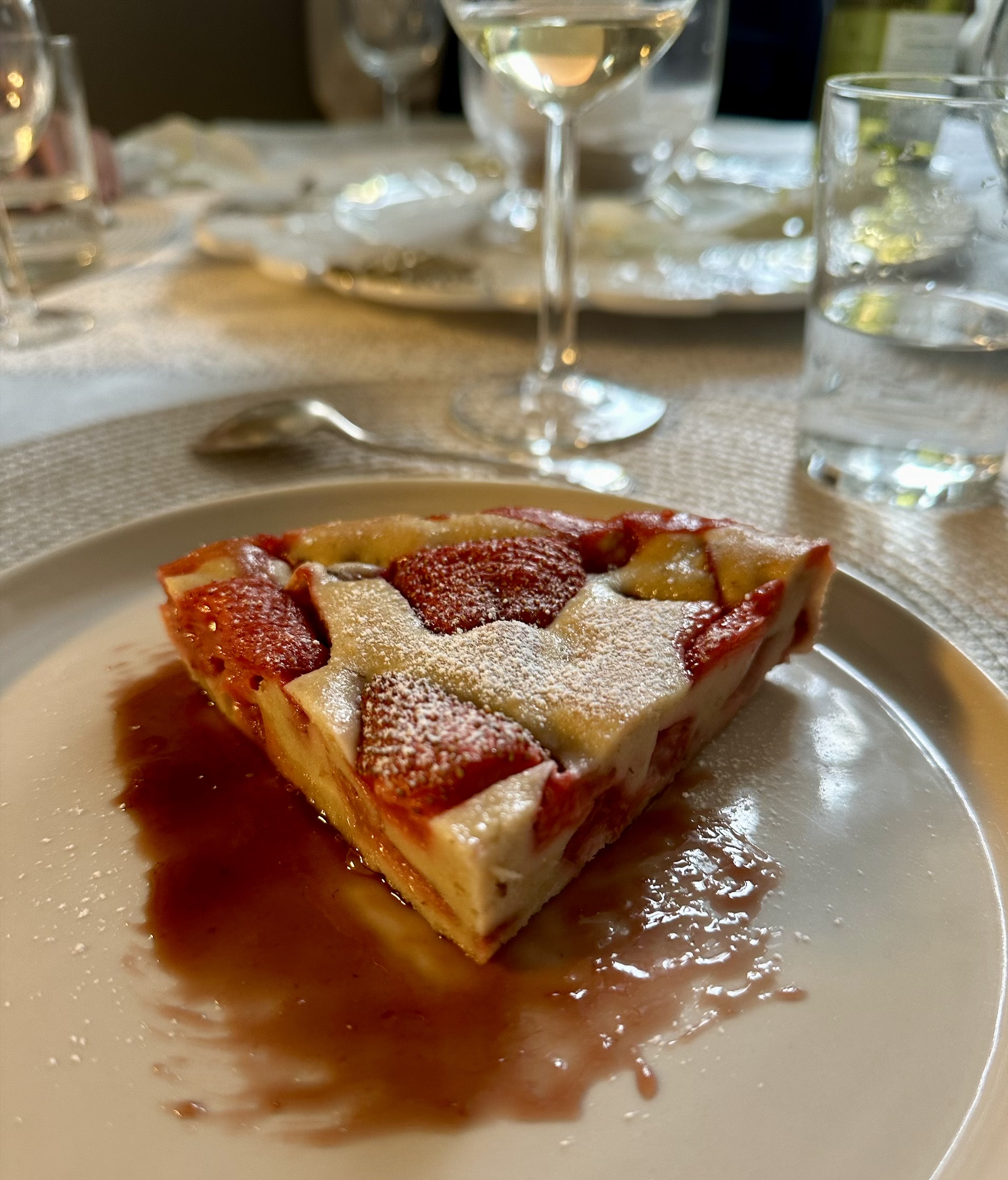
Jazz and candles set the mood for a five-course feast, and of course good wine and conversation. We chatted over appetizers of homemade sardine pate and cucumbers with pesto and olives, then moved to the table for white asparagus soup and a fish dish with tomatoes, peas and garlic. Next came five different cheeses and a homemade strawberry tart.

The meal - prepared with all organic, in-season ingredients - was the best I had the whole trip. And at $57 each, it was a good value. 

Paris seems like a natural for dining experiences such as these. I wasn't sure I could find a similar opportunities in Mexico City or Hanoi, Vietnam, but persistence paid off.

A  40-minute Uber ride from Mexico City's historical center brought us to the home of Roberto and Cristina who welcomed us into a cozy living room filled with art, antiques and shelves lined with vinyl records, CDs and books. Both are devoted amateur cooks known to throw paella dinners for 50, and they stage pop-up dinners in Chicago when visiting their daughter.


Dinner with Roberto and Cristina in Mexico City 


Roberto mixed margaritas as we chatted with Cristina and their friend Luz, visiting from Cuernavaca. Dinner ($48 per person) began with a soup made from green tomatillos, followed by Chiles en Nogada, a classic Mexican dish featuring the national colors of green, white and red: a poblano pepper filled with minced pork and a mix of fruit and spices, covered with a creamy walnut sauce.

In her spare time, Cristina makes fruitcakes — 100 every year, which she sells around the holidays. We toasted our new friendship by sharing the first slices of the season.

On a trip to Vietnam last winter, I spotted a listing for  “Hanoi Farm Tour and Cooking Class with Local Family.” The host, English-speaking Mandy, 38, proposed a visit to a rural community 12 miles out of the city center where her husband’s family has farmed for generations. Guests are invited to collaborate with her on a menu, visit the local market and wander through the fields of her farm and other neighboring farms. Then it's  back to her house to help prepare a meal and have lunch, all included in the $35 per person price. 

Several WhatsApp messages later to confirm details and the location for a Grab (like Uber) taxi from our hotel in Hanoi, we met Mandy outside the local temple on a rainy morning in the village of Song Phuong. She gave us each one of the conical hats Vietnamese wear to protect themselves from sun and rain. As we began our walk through the market, it became apparent why Song Phuong is called “Vegetable Village” for its acres of fertile farm land and large wholesale market that supplies vendors and restaurants in Hanoi daily with fresh produce and meats. 

Walking through the fields with Mandy in Hanoi


Sitting at her kitchen table with knives and cutting boards later that morning, we chopped bunches of herbs, shredded carrots, green mangos, cucumbers and jicama for a salad; sliced mushrooms for a dish of pork and shiitakes in steamed cabbage leaves; learned to wrap spring rolls in rice paper; and helped prepared a pork meatball soup with rice noodles, shallots, tomatoes and taro stems.


Cooking in Mandy's kitchen


We sat talking and eating until early afternoon. While we waited for our taxi back to Hanoi, she showed us her garden. She and her husband are a long way from retiring, but  when they do, they hope to farm, not for survival but for the pure joy of growing what they eat.

Eatwith's website includes  experiences other than dinners, such as cooking classes or food tours, so it helps to know what you want and what your strike price is while searching. I usually look for something in the $50-$60 per person range, which usually includes beer or wine. Check the reviews to see if they are current. Some hosts never resumed their dinners after the Covid pandemic although their listings remain on the website.

Lorena and Vlad in Bucharest

Our last Eatwith dinner of 2004 ($51 per person) was in Bucharest, Romania with Lorena Duicu and her husband, Vlad. She was a former Airbnb host. They are now both involved in real estate development, and love cook, ski and travel.

After Ubering to their house a few miles from the historical center, we got acquainted over glasses of their homemade plum brandy, then moved in their dining room for grilled eggplant salad, smoked fish, a delicious pork stew simmered in a clay pot, polenta and a homemade plum crumble pie

It was an evening filled with good conversation about American politics, the war in Ukraine and our mutual love of travel. 


Jun 17, 2024

Paris: For lasting memories, settle in, and find your own special spots


Street art in the Butte-aux-Cailles

I had mixed feelings when a friend suggested meeting up in Paris just two months before the start of the 2024 Summer Olympics in late July.

Not only would preparations be underway for an expected 15 million visitors - think rising hotel rates, construction of viewing platforms in front of the Eiffel Tower, Metro stations closed and bus routes rerouted due to construction - the city itself would likely be overrun with tourists hoping to get an early start.

But off I went for nine days in late May. Away from the usual tourist sites, the city was not as crowded as I expected. The weather was beautiful.  I loved that it stayed light until early evening. But I felt a bit sad for first-timers who might be disappointed to find many iconic monuments off limits or obstructed by Olympics reviewing stands and ugly orange barriers.

Notre Dame under reconstruction after a fire in 2019

It's times like these that call for seeking out the hidden gems, or better yet, finding your own special spots that can reward you with a memory more lasting than a picture of Notre Dame with a crane next to a reconstructed spire or a partially-blocked Eiffel Tower.

One way to start is by staying in a neighborhood outside the main tourist areas, but with easy public transport to whatever is on you must-see list.

For me, it was an Airbnb in a family home in the Butte-aux-Cailles, once a fenced-in, hill-top village outside of Paris, now a charming residential neighborhood in the 13th arrondissement near the Place d'Italie where several metro lines and buses converge. 

My Airbnb on Rue Villa Daviel

My compact room with private bath and breakfast ($130 per night) was one of three in a house on the Villa Daviel, a quiet lane with street lamps and flower boxes.  From here, I could zip down on the Metro to see the latest exhibit at the Musee d'Orsay, then bask in that relaxed feeling of "coming home" to a neighborhood filled with friendly restaurants, bars and bakeries catering to a local clientele of French apartment dwellers.

Rue Villa Daviel

Helping me get to know the neighborhood was Isabelle O'Leary, a volunteer with Paris Greeters, a group of local ambassadors who donate their time to show visitors around their favorite parts of Paris.

 Isabelle at a neighborhood fountain that dispenses water from an artesian well

We walked for two hours on a sunny morning as she explained how the Bièvre river runs under the streets after being covered up in the 18th century to make room for the expansion of the city of Paris into outlying villages.

Isabelle pointed out an Art Deco neighborhood swimming pool, a secret set of stairs leading to a hilltop viewpoint and street murals by a well-known female artist named Miss. Tic. At the Place Verlaine, the site of the first successful hot air balloon landing in 1783, she pulled a plastic cup from her purse so I could have a drink from an artesian well that dispenses fresh drinking water.

Across from my Airbnb was La Petite Alsace - a working-class housing estate of half-timbered houses built in 1913 linked to industrial sites such as the Gobelins Tapestry Factory which supplied the court of the French monarchs. We continued strolling through the Sunday outdoor farmers market, and over a stop for coffee in the Parc Montsouris, we talked about our mutual interest in travel and her upcoming plans for a trip to Japan. 

La Petite Alsace

After a few days in the Butte-aux-Cailles, I moved to the Hotel Du Levant, a long-time favorite hotel near Place St. Michele in the heart of the Left Bank.


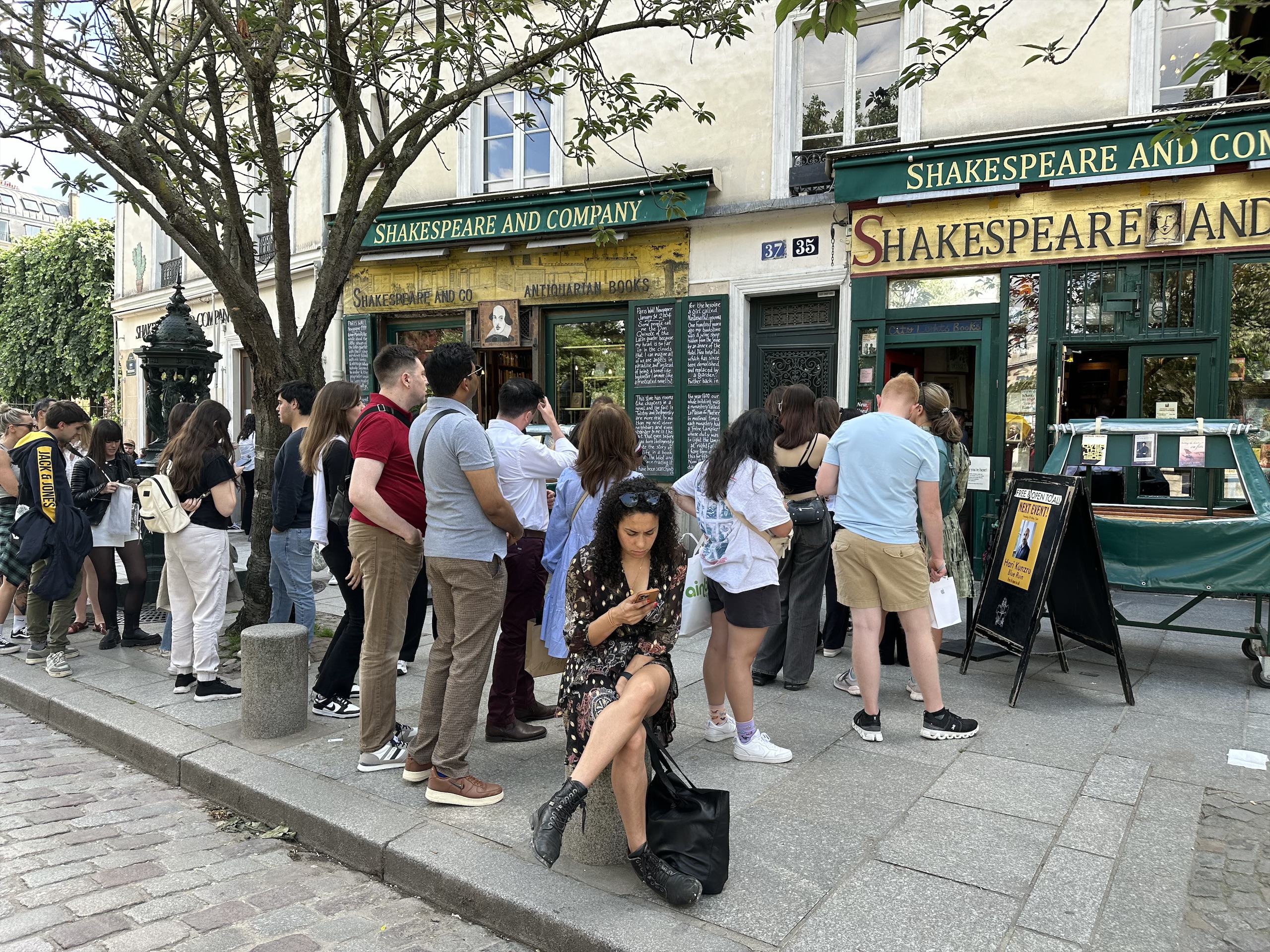
Tourists outside Shakespeare & Company bookstore on the Left Bank 

The two areas couldn't be more different. While there were virtually no tourists in the Butte, St. Michele swarmed with visitors, attracted by its location on the Seine River, across from Notre Dame, and dozens of cheap restaurants advertising onion soup, crepes and pizza. This is a fun and convenient area for exploring, but not one to seek out for an authentic Paris dining experience. I was surprised, then, to find two made-for-the-memory book gems just a few blocks out of the fray.

Searching Trip Advisor and various blogs for a casual wine bar, I found 5e Cru, a few steps away from the backside of Notre Dame, and a block away Le Tour D”argent, one of the most expensive restaurants in Paris. 

5e Cru on Rue Cardinal Lemoine

5e Cru is tiny cave manger (wine bar that serves food) in the 5th arrondissement. There were only a few tables scattered among shelves and boxes of bottles. But no reservations seemed necessary, at least when I showed up at 7 p.m.


I chatted a while with Beatrice, the friendly wine steward/waitress. We decided on a beautiful veggie quiche with roasted vegetables, and two excellent wines by the glass. Business had been slow in May, she said. While the restaurants around St. Michele were packed, there were just two other customers here, leaving her time for a stranger to feel appreciated and remembered. 

“Merci, Carol,” she said when I left. Dinner and two glasses of wine came  to $30. I vowed to come back.

More memorable than a five-star restaurant was the intimate dinner a friend and I and another German guest had with Catherine, a Frenchwoman in her 60s, who hosts guests in her home via the website Eatwith.com.

Eatwith works a little like Airbnb, only for dining rather than spending the night. Hosts post a menu for a proposed meal, tell a little bit about themselves, and post the price and available dates. Guests then send a request, pay in advance by credit card and show up at the agreed-upon time and day.

Dinner with Catherine

Catherine, a retired fashion industry exec whose father was a chef, hosted the three of us in her Right Bank apartment just across the bridge from the Île Saint-Louis near the Sully Morland metro stop and a short walk from the Bastille.

Jazz and candles set the mood for a five-course feast, and of course good wine and conversation. 


We chatted over appetizers of homemade sardine pate and cucumbers with pesto and olives, then moved to the table for white asparagus soup and a fish dish with tomatoes, peas and garlic. Next came five different cheeses and a homemade strawberry tart.

The meal - prepared with all organic, in-season ingredients - was the best I had the whole trip. And at $57 each it was a good value. 

Walking back to my hotel after dinner, my thoughts drifted back to the evening spent listening to the soothing voice of beloved French singer Françoise Hardy. Catherine introduced us to her music as we chatted about politics, travel and food.

Hardy died at 80 shorty after I arrived back in Seattle. I read the tributes in the New York Times and Washington Post. Then I put her 1962 hit, Tous le Garçons e les Filles (All the Boys and Girls), on my playlist, and wrote Catherine a note thanking her for the memory.


Nov 5, 2022

Postcards from Paris: Post-pandemic musings from my favorite city


Cafe de la Rotonde on Boulevard Montparnasse

Warm lights inside the Art-Deco-style Cafe de la Rotonde beckon early risers for a quiet coffee. Lines no longer snake outside museum entrances. Late afternoons call for a wooly scarf and an Aperal spritz on an outdoor terrace. 

With the summer crowds gone, Paris is Paris again. It may just be my favorite city, especially in late fall. I've been coming here almost every year for the past 20. Now, after a two-year break due to Covid, I'm feeling my way around again. 

My favorite two-star hotel near Place de la Nation has raised its prices, and installed AC in all the rooms. 

The husband-and-wife owned tea salon next door appears to have permanently taken over a wide swath of sidewalk with its its Covid-era outdoor seating. No heaters though. Paris is on an energy-saving diet. 

My paper Metro tickets left over from my last trip still work, but not for long. The carnet - a booklet of 10 tickets sold at a discount - has gone digital with a pre-loaded plastic Navigo card. 

What's changed? What hasn't? What's new, given preparation for the summer Olympics in 2024? 

 A few musings after a week's stay:

Transportation

Paris' metro, bus, RER and train systems remain fast and efficient most times; crowded and unreliable other times. Pre-Olympic improvements on the RER B and C lines make using either to get to Charles de Gaulle airport (RER B) or Orly (RER C) risky. Then again, buses and taxies get stuck in traffic. And with new construction and renovations underway everywhere, traffic is bad.

After waiting 40 minutes one morning for a bus to De Gaulle that never came, I ran across the street to the RER station, and with one metro connection, made it to the airport in 40 minutes. Another morning, the RER B was out of service several stops before De Gaulle, requiring a 20 minute ride the rest of the way on a shuttle bus. Another day it was shut down all together after someone left an unattended bag on the train. 

Best advice: Have a back-up plan, or better yet, spend the night before your departing flight at an airport hotel. The Ibis CDG Airport hotel a few steps from Terminal 3 is one of the best options. It's clean, modern, reasonably priced, and the only way you could miss your flight is if you sleep in.

Be prepared for many people commuting to work and school on bikes and scooters. Step into a dedicated bike lane with the same caution you would crossing a street. 

Inflation and the U.S. dollar

Inflation has hit Europe hard, and Parisians will tell you they feel the impact of rising prices. Cushioning the effects for American travelers is the rising value of the U.S. dollar, now worth slightly more than the euro. 

A 5 euro coffee at the Rotonde is $4.95 U.S. whereas in 2021, it would been around $5.90. This means it costs less to relax here in elegant surroundings, sipping coffee served with a pitcher of warm milk, than it does for a pumpkin spice latte at Starbucks.

Good value has always been easy to find in Paris, and still is. Look no further than a neighborhood away from the major sites.

Example: My 12 euro ($11.64) lunch of smoked salmon, salad, bread and  an anise Pastis at La Fee Verte, the Green Fairy, a classic cafe near Pere- Lachaise cemetery. The cafe  specializes in absinthe, the green anise-flavored spirit favored by Parisian artists and writers in the late 19th and early 20th centuries. 

The Green Fairy cafe

I found it by walking along the Rue de la Roquette towards the Bastille, a route suggested by Harriet Welty Rochefort, a Parisian ex-pat author (French Toast and French Fried among other books) and friend whom I had met for coffee earlier in the day.

Harriet and I at a cafe near Pere-Lachaise

In the past the La Roquette district was known for containing two prisons: the "Petite Roquette" for young delinquents and women, and the "Grande Roquette" for major criminals. The guillotine was brought out at night to bring the lives of the imprisoned to a fateful end.Today, the district is a happier place filled with trendy art galleries, bars, restaurants and a busy nightlife.

Self-service everything

The same "staffing" shortages affecting U.S. retailers are affecting most service providers in Paris. Expect to use a self-service kiosk to buy everything from grocery items to train and metro tickets. 

I spotted only one or two live cashiers in many stores, including the gourmet section of the luxury Galeries LaFayette department store which draws many foreign tourists.


Galeries Lafayette

Passengers obtaining boarding passes from Air France at Charles de Gaulle must use self-service kiosks as well as check their own bags. 

Apple Pay is accepted almost everywhere as well as credit cards equipped with the "tap" symbol for contactless payment. To take advantage of the most favorable exchange rate, avoid withdrawing euros from Euronet Worldwide bank machines installed near many shops and restaurants. They charge a hefty fee -$3.95 euros - plus surcharge - 12 percent or more - by lowing the exchange rate below what is available from ATMs operated by real banks. The exchange rate might be 0.82 euros to one dollar, for instance, compared to the current rate of 0.99.

A clue will be instructions to tap on "accept this exchange rate" before you complete the transaction.

Duty-free shops at De Gaulle airport offer customers the option of paying in euros or dollars. Always opt for euros to avoid similar surcharages.

Iconic sites and off-the radar art

No matter if you're a first-time or repeat visitor, everyone feels the pull to walk past and/or visit the iconic sites for which Paris is known. 

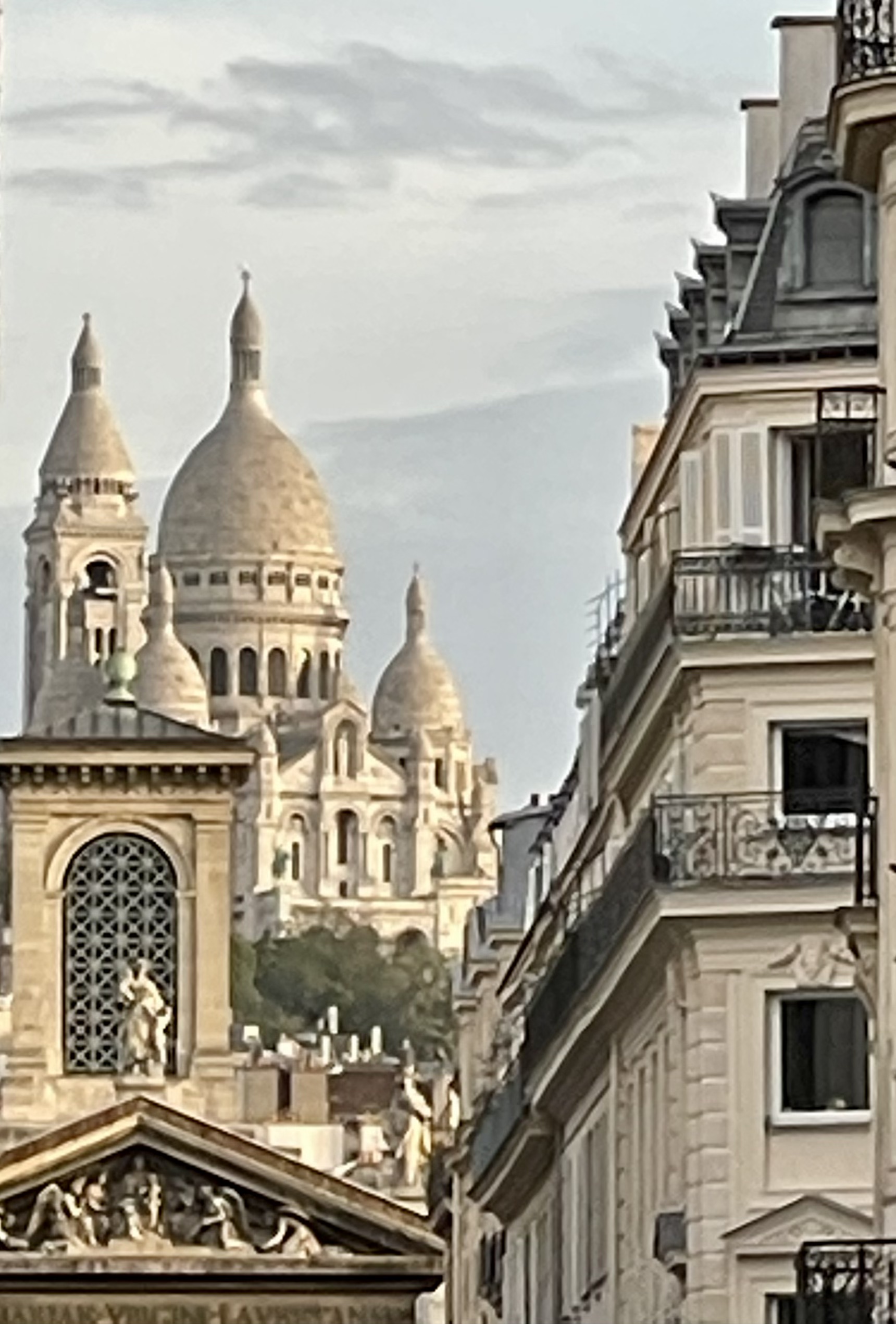
Sacre-Coeur in Montmartre

I like to find vantage points in unexpected locations. This sighting of Sacre-Coeur high on the hill in Montmartre came into view as I glanced down a side street while walking towards the Galleries Lafayette department store.

Notre- Dame Cathedral

Notre-Dame Cathedral is scheduled to reopen to the public by 2024—five years after a fire collapsed its roof and toppled its spire. It looks much the same from the front, minus the spire, but the entire back area is a construction site.

Visits to major museums require advance purchase of timed tickets.The show-of-the-moment is Frida Kahlo at the Palais Galliera, usually sold-out each day. On the other hand, it was easy to walk right into the Musee d'Orsay with a time ticket purchased the day before.  Sadly, one of my favorite paintings was missing. 

Degas's Absinthe Drinker

I looked everywhere for Edgar Degas's Absinthe Drinker. Finally, I asked, and was told it was on loan to the Louvre Abu Dhabi. The 1886 painting portrays a woman and a man sitting in a café, staring blankly, looking almost sad. The painting became controversial after it was discovered the artist used models posing as real patrons, and painted it in his studio, not a cafe. The painting cast a slur on the reputations of the two models, and Degas had to state publicly that they were not alcoholics.

Not everyone has time for Paris' lessor-known museums, but making time for at least one can feel more rewarding than trudging though the big sites. 

Burdens literally fall on the shoulders of women all over the world as depicted in a moving exhibit by American/Indian photogrher Lekha SIngh at the Musee de l’Homme (Museum of Manknd). Fifty portraits celebrate the courage and strength of women in India, Tanzania, Morocco, Rwanda, Kenya and other countries. They are the non-motorized engines that transport heavy loads everyday to provide fuel, water and building materials for their families.

A woman from Kenya carries a stone to build a fire pit for her family


Women in Tanzania fill 50-pound pots with water to carry to their families

The bonus of visiting this museum (Trocadero metro stop) is the dead-on view of the Eiffel Tower from the upstairs cafe window. 

Paris greeter Raphael Rispoli

Better than any museum is to spend a few hours with a Paris Greeter. These are locals who volunteer to spend time with visitors on two to three-hour walks around the city. They are not tour guides, but rather people who enjoy meeting others and sharing their knowledge of  favorite areas.

 I met up with Raphael Rispoli for a two-hour morning walk around the Left Bank, starting near the Jardin du Luxembourg and ending at the River Seine near Notre Dame. We enjoyed lunch together afterwards at a small restaurant before parting ways in the early afternoon.  


Sep 29, 2022

Porto, Bilbao and other stops along the way to post-pandemic overseas travel


Despite nagging uncertainties about Covid, tales of crowded airports, lost bags and high prices, strategic planning may be all the travel insurance you need for successful overseas travel this fall. 

That's what I'm finding as Tom and I put finishing touches on our second European post-pandemic trip this year, this time to Porto in Portugal; Bilbao in Spain; a few days with friends at their rental house in southeastern France; and some time in Paris.

This is what I call  "tame" travel, nothing complicated and no third-world destinations. That saddens me a little since our last trips before Covid were to Egypt, Uzbekistan and Myanmar. There will come a time for more adventuresome travel again, but Covid is still with us no matter how hard we'd like to wish it away. So for now, we're sticking to areas that carry fewer risks, making no non-refundable upfront payments, and honing in on new cities and experiences while avoiding crowds and crowded airports.

The plan starts with what's called "second tier" cities - large cities that don't include the busy capitals.

Port in Porto

We've been to Portugal only once, and to Spain a few times, but never to Porto, the transportation hub of the wine trade for which port wine got its name. Harry Potter author J.K. Rowling lived here between 1991 and 1993, inspired by visits to the Lello bookstore and Majestic CafeAlso new to us is Bilbao, the urban, riverside hub of Basque country, a culturally unique area between southern France and Spain. 

When it comes to avoiding the hassles of major airports and tourist crowds, flying directly into  a smaller city is always a good move. Many are surprised to find that this is fairly easy to do from the U.S., given the availability of non-stops to European hubs such as Amsterdam, with onward connections to cities such as Florence in Italy instead of Rome or Milan, or in our cases, Porto instead of Lisbon.

No need for travel insurance to cover the airfare because it can be cancelled or changed without penalty, a policy most airlines instituted during Covid, and so far have not walked back. 

Finding accommodations with liberal cancellation policies has also been easy.

Since Covid, Airbnb has convinced most of its owners to offer fully refundable bookings within a few days of arrival. 

The pedestrian Rua das Flores

For our first three nights in Porto, we booked a lovely studio with a balcony overlooking Rua das Flores, a pedestrian street lined with 17-19th century buildings that once housed wealthy merchants. The price was a reasonable $125 per night, refundable up to five days ahead. 

The same policy applies to an $85-a-night Airbnb apartment we rented in Pinhao, the center of the port wine trade in the rural Douro River Valley, and  a six-room B&B ($110) back in Porto's Riberia historic district booked for our last three nights.

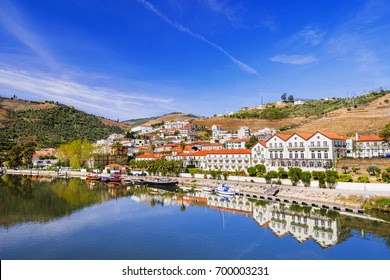
Pinhao in the Douro River Valley

Also changeable and refundable (for a credit) were our flights to Bilbao and Paris purchased online on Vueling Airlines, a low-cost Spanish airline.

With all the talk about inflation in Europe, American travelers may not find prices as high as expected, due to the strong dollar, now one-to-one with the euro.

The one place we did encounter sticker shock was in first-tier Paris where the price of the hotel room I booked in 2019 went up from $90 to $150. We could have looked harder, or just paid the price. But since we'd been thinking about taking a bike tour around Versailles, a wealthy suburb that King Louis X1V made the French capital from 1682 to 1789, we pivoted to a homey B&B there instead for $110 with breakfast. 

Putting together your own trip vs. taking an organized tour is more work, of course, but the rewards are independence and flexibility. Still, it's often easier to rely on someone else for short excursions that involve complicated transportation logistics or having a car. 

For these types of day trips I turn to "GetYourGuide," a Berlin-based online travel agency and marketplace for excursions offered by tour companies worldwide. There's no advance payment, and cancellations are generally allowed 24-48 hours before departure.


The Pavia Walkways near Porto

It's here I found a day trip from Porto by mini-van ($90 each) to the Paiva Walkways, a four-mile boardwalk zig-zagging through a geopark on the the left bank of Paiva river. It also includes a side trip to the   516 Arouca Bridge, a 1,692-foot metal suspension bridge suspended 576 feet above the water; lunch; and a boat ride along the canals of the nearby town of Averio. The tour company observes Covid precautions such as requiring passengers to wear masks, and takes half the usual number of people in its vans.


Gaztelugatxe Island

A similar excursion in Bilbao ($60 each) will take us to the island of Gaztelugatxe where a 10th-century hermitage is connected to the mainland by a bridge and 240 stairs. Some will recognize it as the island fortress of “Dragonstone” from season 7 of Game of Thrones.

Many Airbnb hosts offer activities such as bike trips and food tours. Filter for "experiences" to see what's offered in various cities. Eatwith.com offers opportunities to dine in the homes of locals. Sadly, we'll miss the chance for a traditional salt cod dinner in Porto because the Portuguese/Serbian hosts will be on vacation. 

Some independent travelers hire private guides, but for my money,  free group walking tours offered through websites such as Freetour.com and GuruWalk, are just as informative, and often more fun. The upbeat guides are often knowledgeable students or professors who work for tips. In Porto, we signed up for two free city walks offered by Porto Walkers which also offers paid port wine and food tours. 

in Bilbao, Freetour's 2.5-hour walk includes recommendations on where to sample the best traditional and modern “pintxos,” the Basque version of Spanish tapas.  Susana, a guide from GuruWalk who describes herself as someone with a "Greek passport and Basque heart," leads small groups through Bilbao la Vieja, a former industrial area which she calls the Soho of Bilbao.

We couldn't decide which of the walks to do, but the price was right, so we signed up for both.